
Returns insist upon some reflection and this return is no different. Half a month upon that route of high along the eastern flank of Mustang, followed up by a half month of Solukhumbu and the wide spaces of Mustang seem simple to conjure.
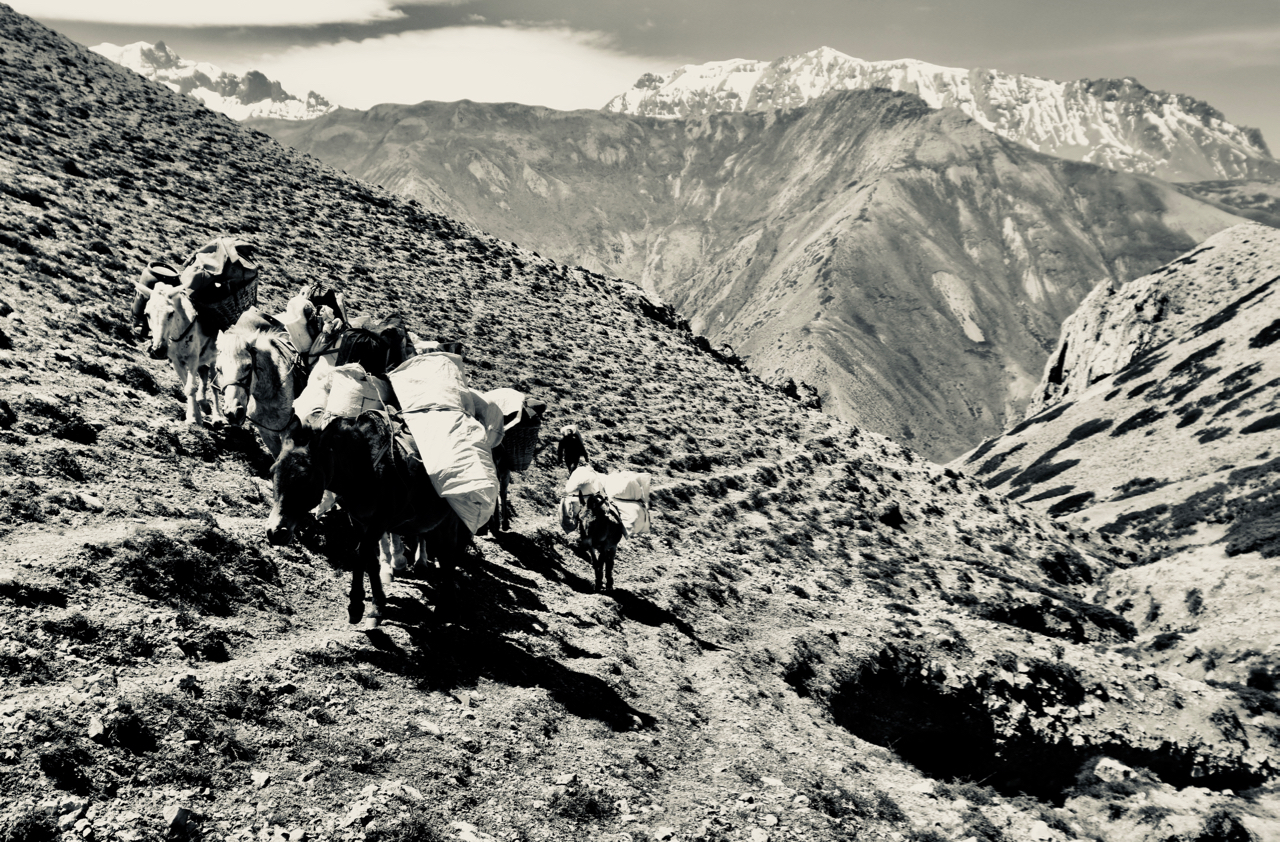
The reassuring view of our mule caravan (and all that it carries)
Mustang’s fate seems to shift all over the orbit but whatever shall be, there is much change in the dust of this formerly independent kingdom. Money comes in to construct (and build atop) the main route which plows through the Kali Gandaki Gorge, though the sources aren’t clear…
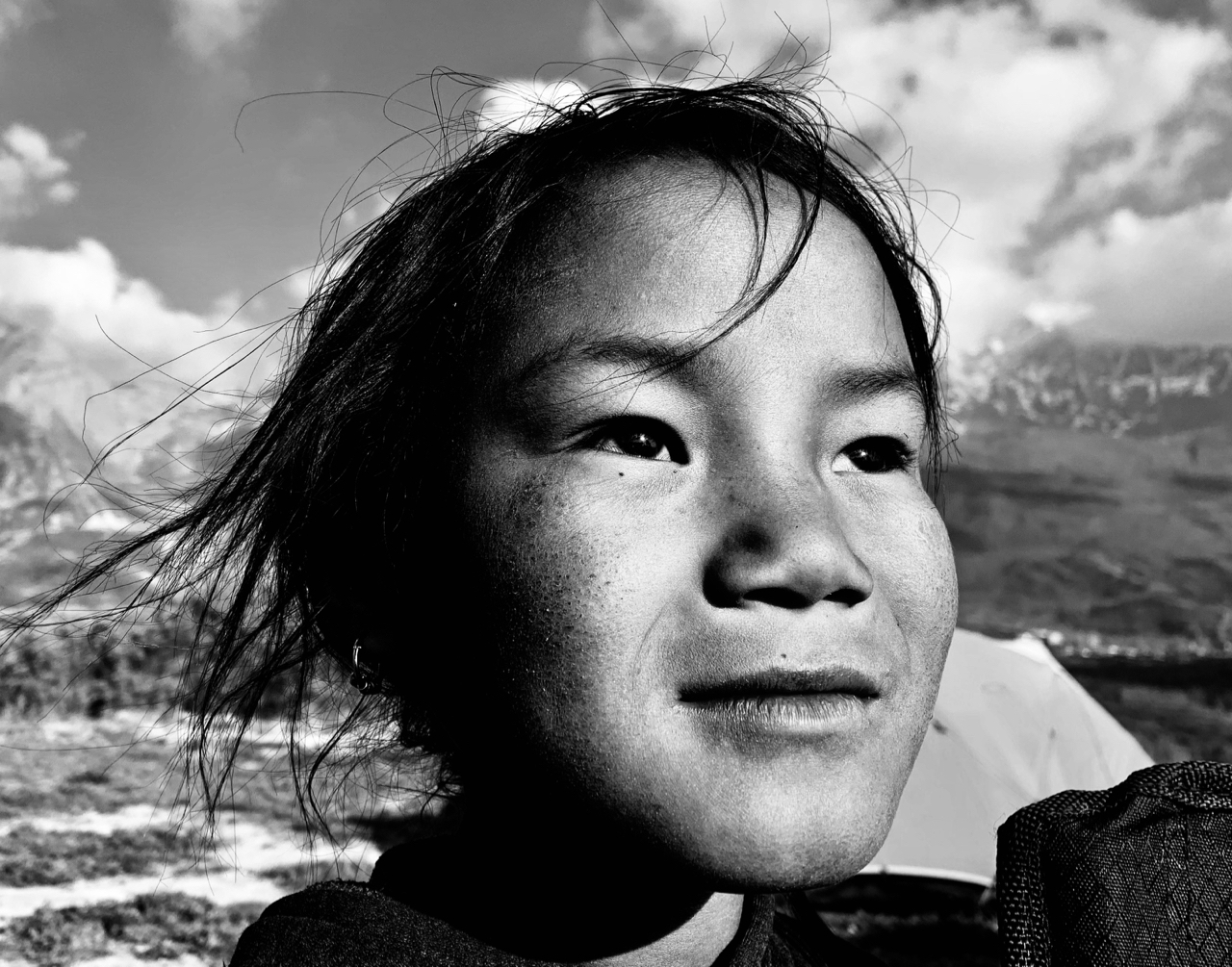
A young Magar girl near the village of Jhong lights up our lives with her fearless strength near our camp site.
Dust, silt, and man machines which belch fumes litter the valley down a thousand metres below us. Jim, Christian, and I head up the eastern flank upon a route that was once the domain of Khampa traders…and hosted Khampa camps and resistance to China’s incursion into Tibet, and though this time was short lived it left marks and memories a plenty in the highlands.
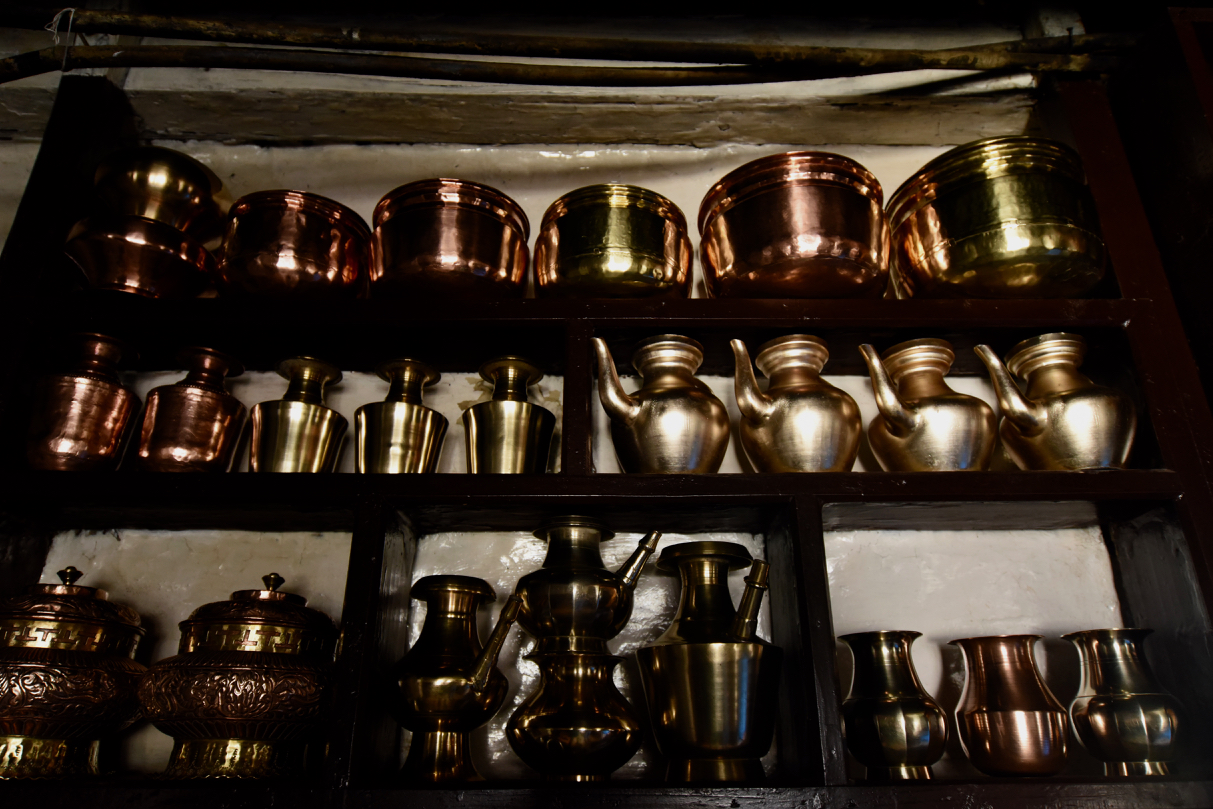
An always reassuring site: a wall of tea paraphernalia in Kagbeni
High and isolated, with pathways that are at times a metre wide, there is wind that comes at intervals that are almost cued, there is the layering of tones and geology, and there are the ammonites that litter valleys hidden encased in river rocks.
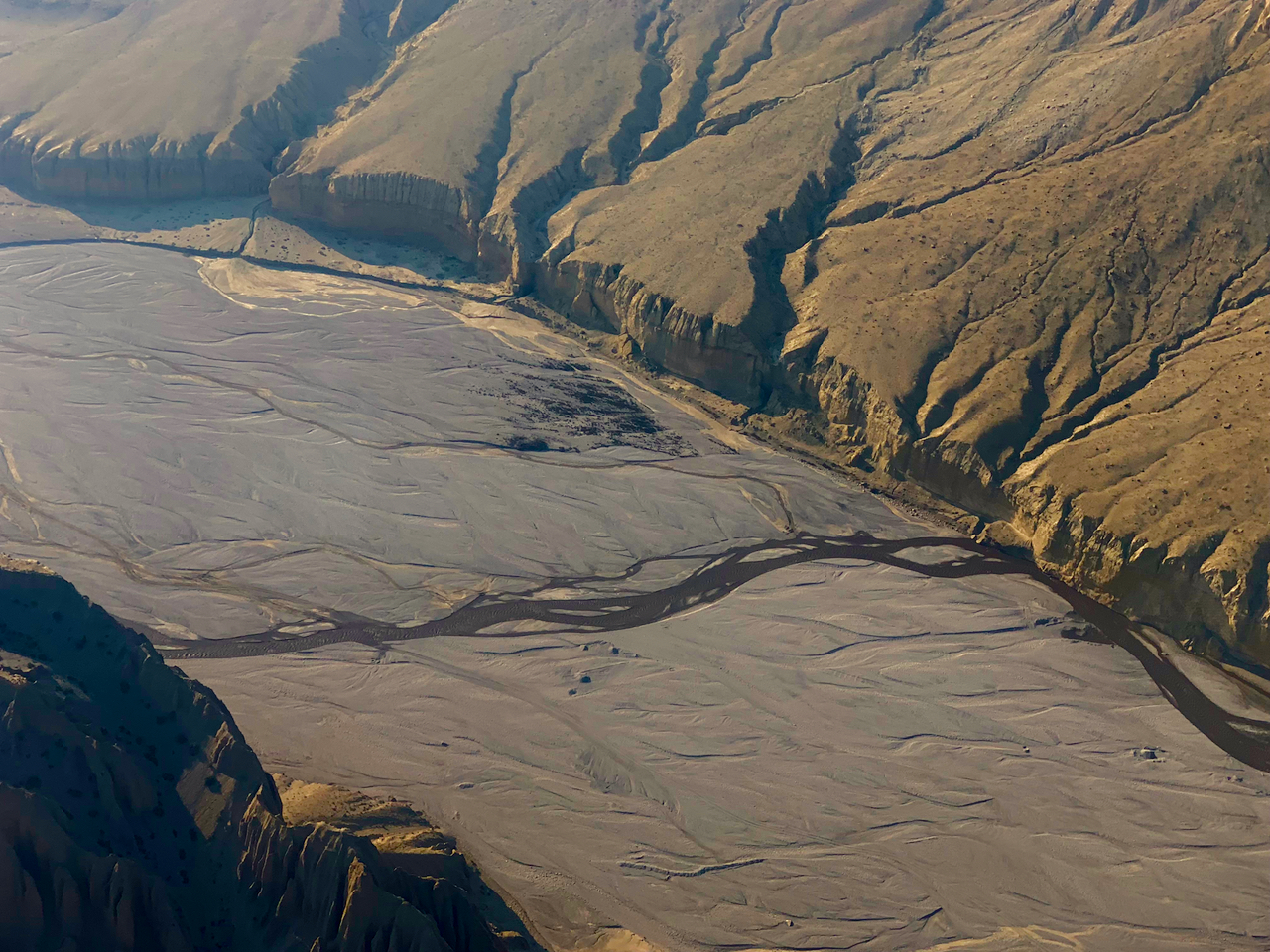
So much above and so much below at these altitudes
Moving through such spaces is like a never ending lesson in geology.
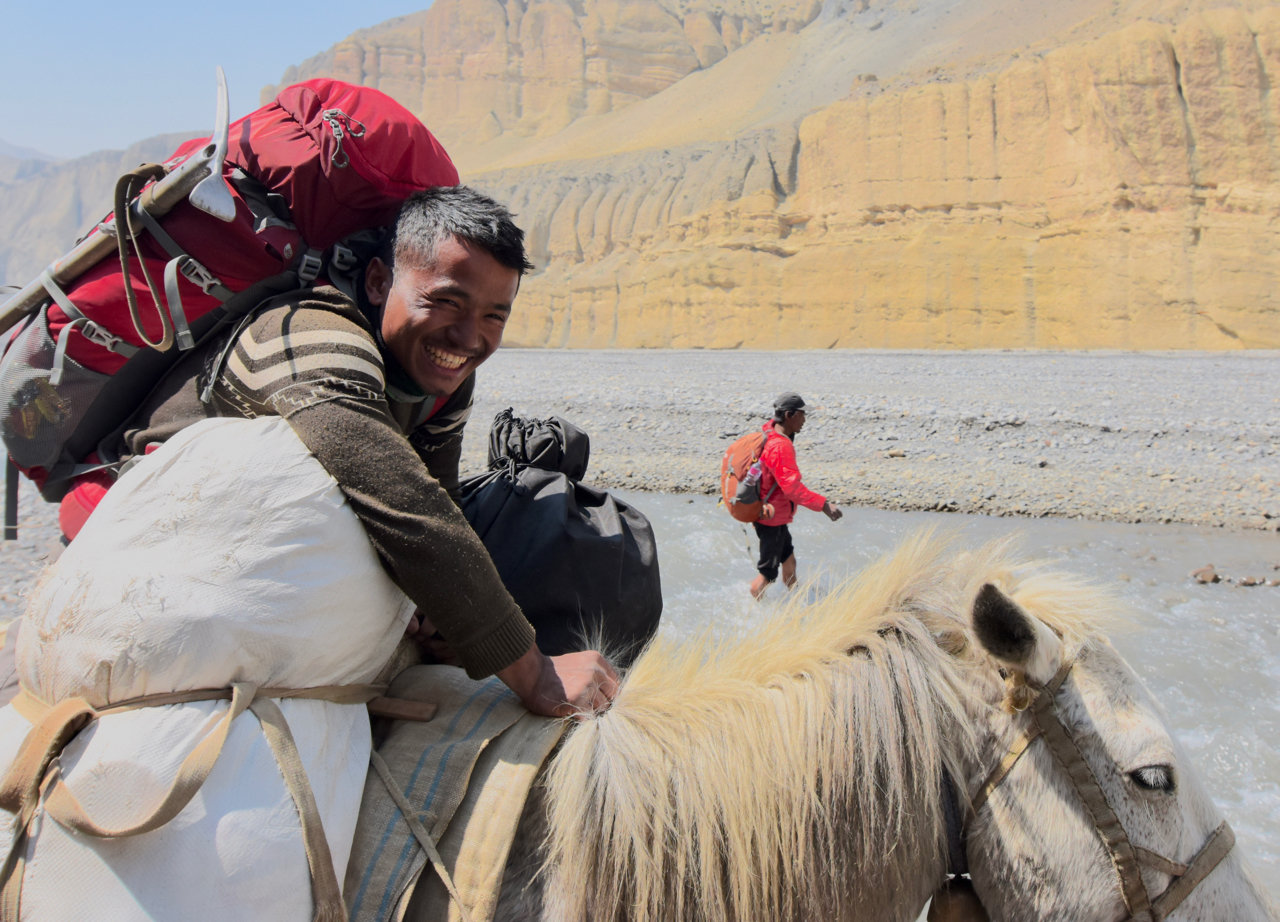
Fun and games as we do successive river crossings
The dominant Sakya lineage and its monasteries lie upon sacred power-zones throughout the Mustang area and the memories of Tantric practice are not long gone at all.

A young monk, the keeper of the key
It is a place that still hums with power and memory.
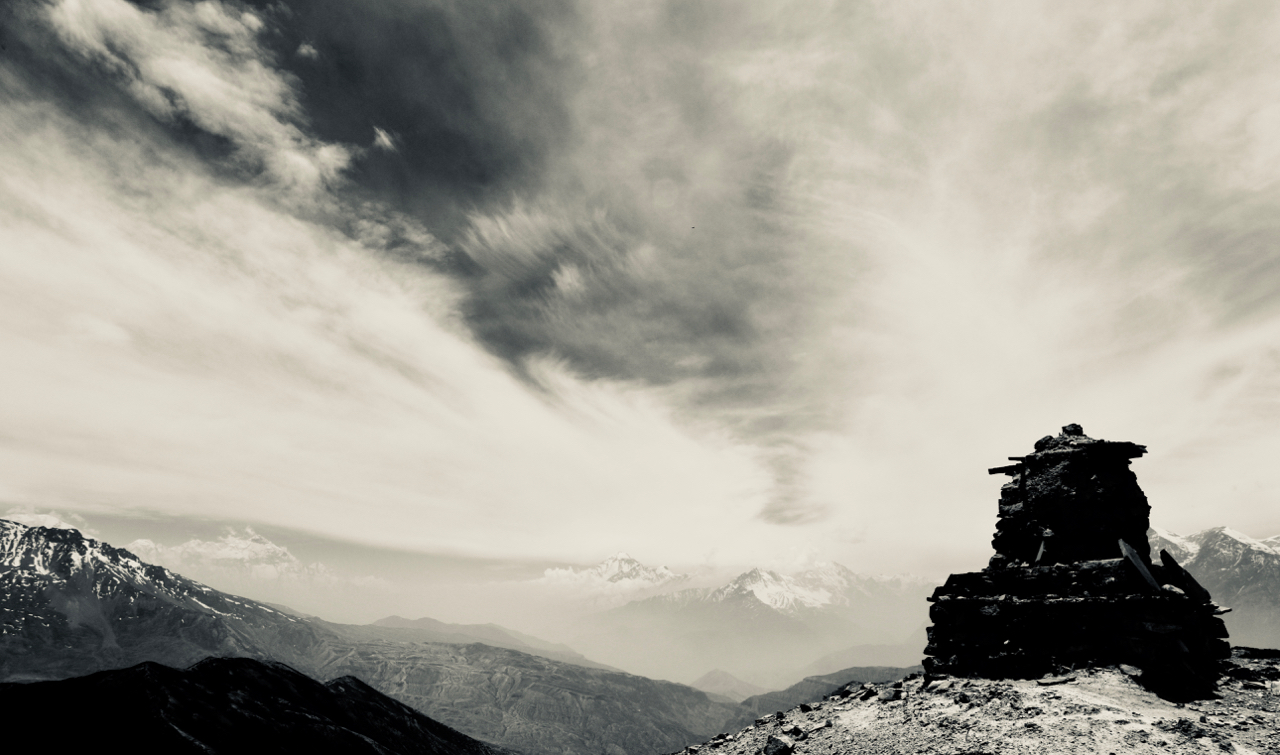
A Chorten marks a pass
Like every year upon this route (thus far) there is too that feeling of being in a world without plastic, without man’s noises but with a kind of autonomy. Such a concept here is accessible and preferred.
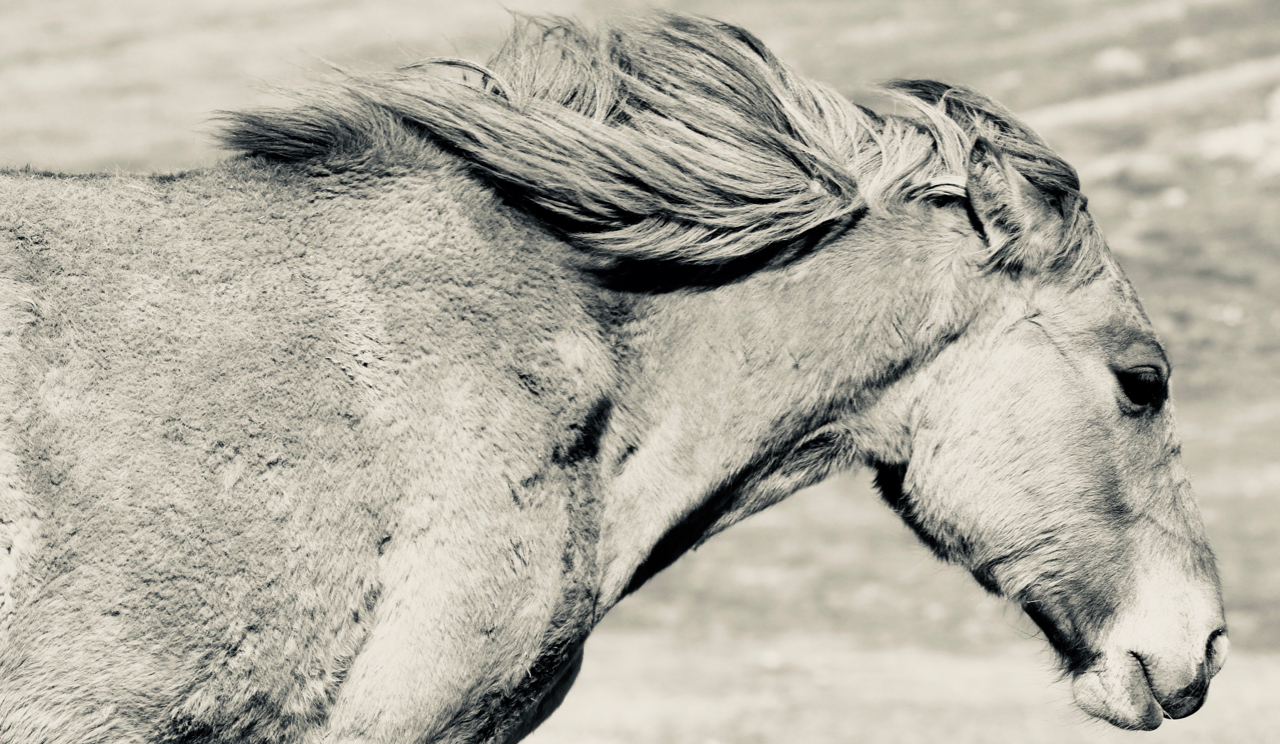
One comes here with all one needs (or with what one thinks one needs) with a team, with mules and with whatever else matters.
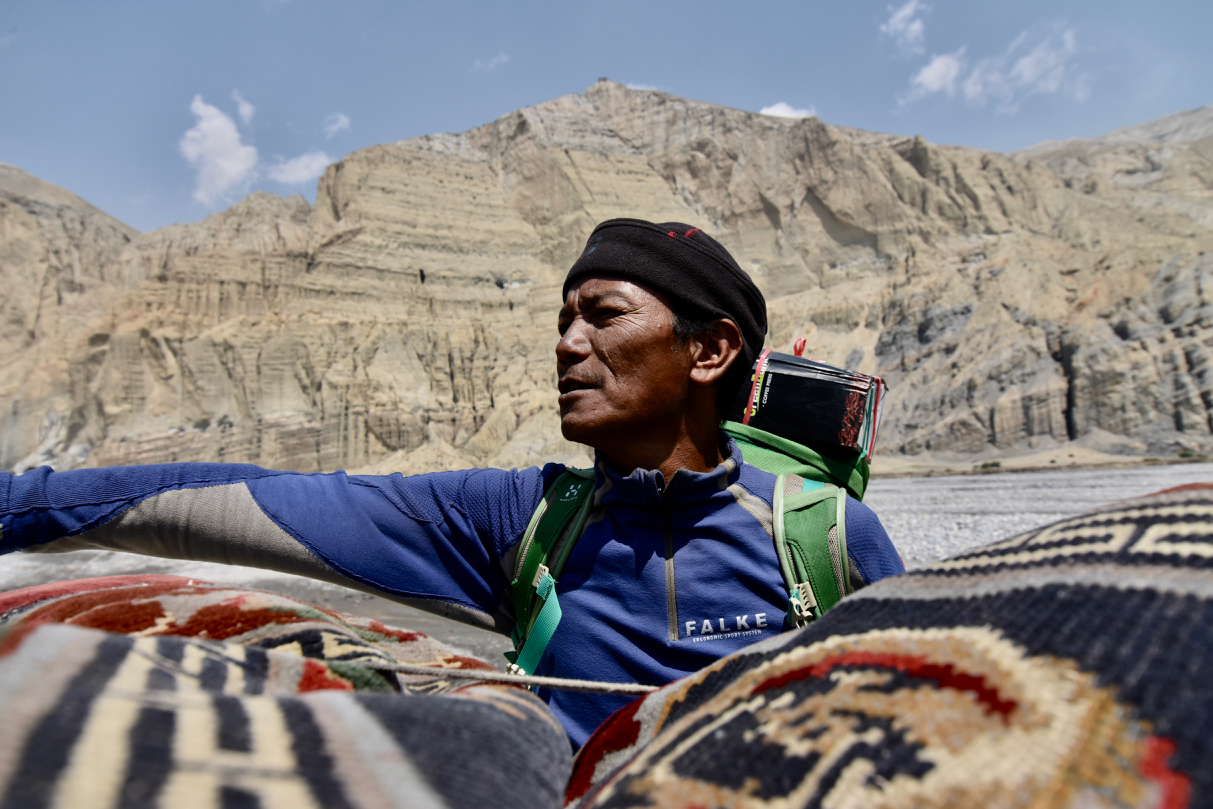
Though Nir wasn’t our official guide, he became (in mere days) our unofficial leader. Throughout the journey he managed to maintain perfect pleats in his trousers! Here he issues out orders and thoughts.
With Jim and Christian, I have dedicates that have chosen to come to a series of spaces that remind that faith, the elements, and a bit of wind is all the mind and body need.
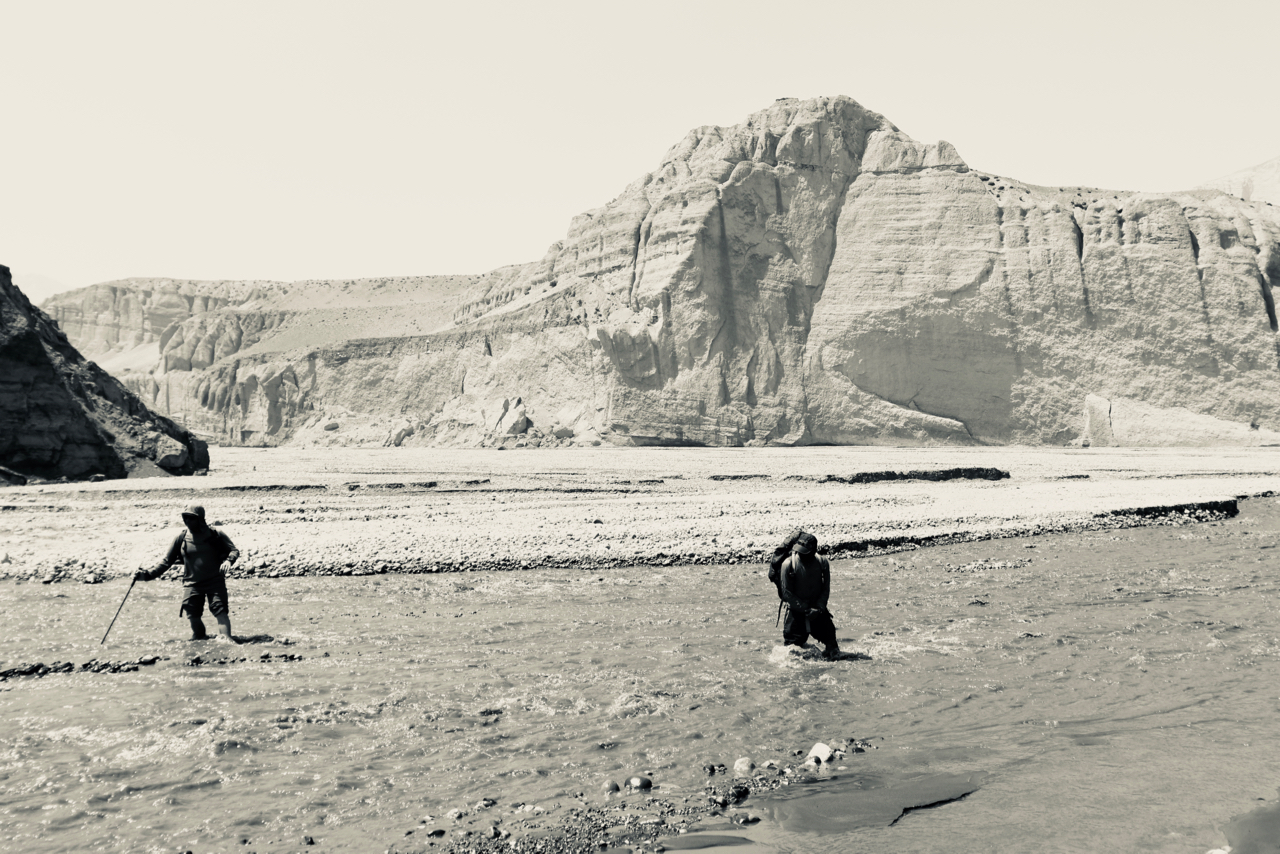
Crossing the ‘Black River’ the Kali Gandaki
We have food, companionship, loads of my tea and a team of Sherpas, Magars, Lo’Ba’s and a chef named Santosh. It is all that is needed.
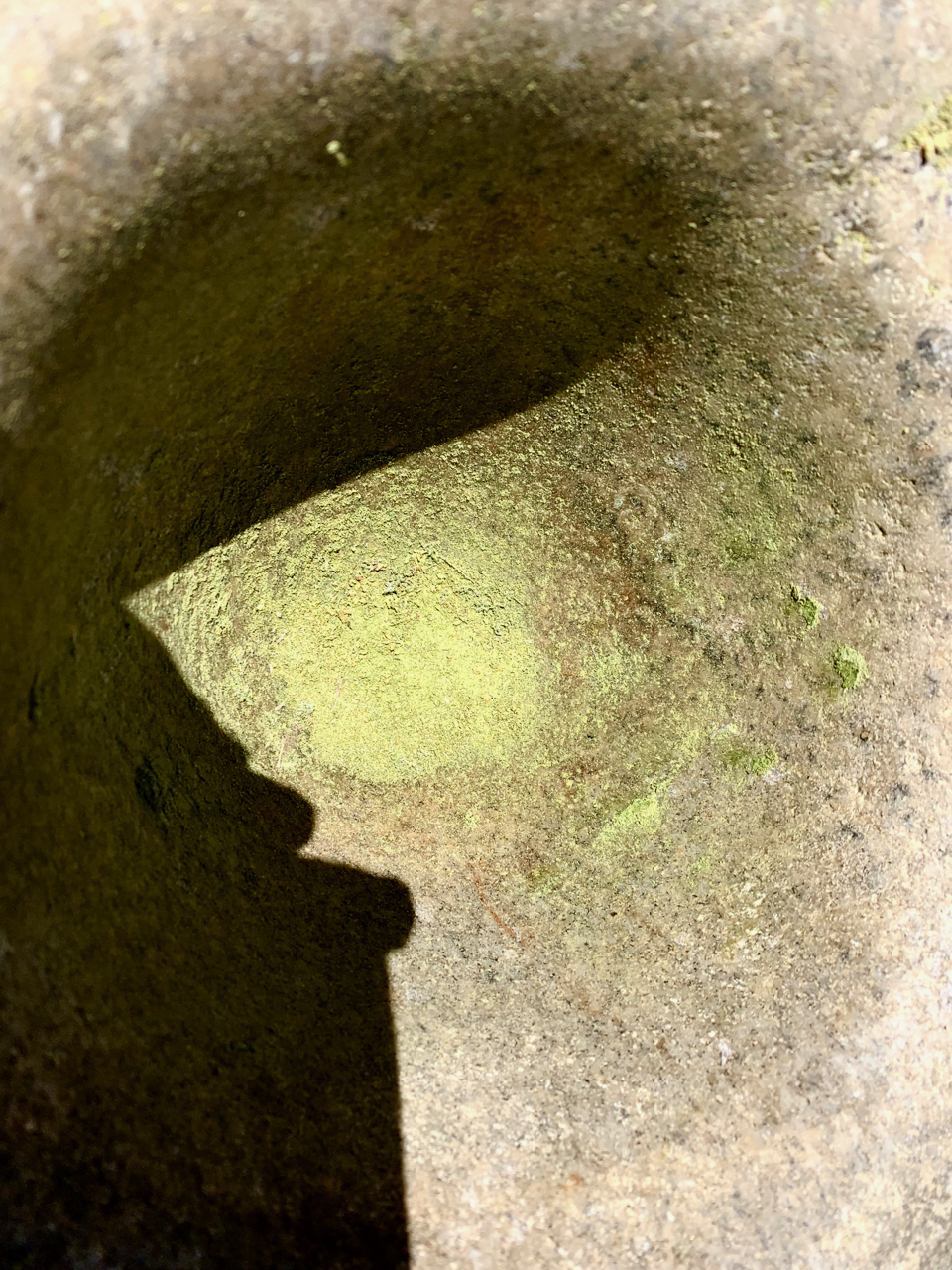
A hollow of stone, long used to pulverize ‘Duba’ (juniper) for incense
