“It is in the mountains that fate is decided”
nomadic saying
Delighted that a piece I’ve done on Tibetan nomadic perspectives on Climate Change is up on UNESCO’s “Ethics and Climate Change in Asia-Pacific” page here. For a link straight to the article this is the link here.
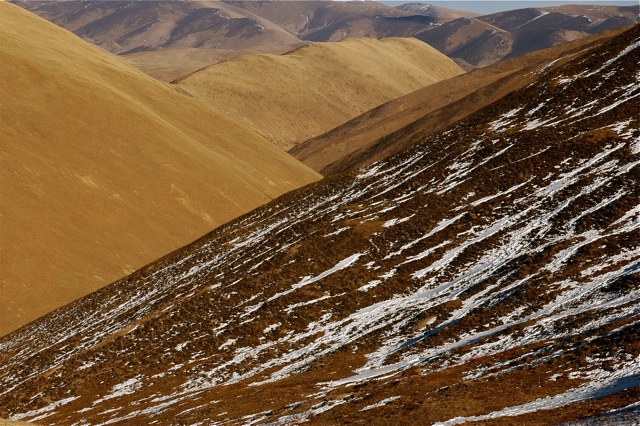
It is not change itself necessarily, but the speed of change that rattles the nomads...and they are people with change and adaptation hard-wired into their very core. Snows are disappearing at unprecedented rates, they say.
The article, titled, ‘Withering Heights’ gives a voice to nomads living over 4 km’s in the sky – on, within – and with the lands of the snows. It is largely in their words, using their perspectives, presenting not my own nor any western clinical view of the world up high, but rather the observations of a people who have long lived in the very face of Mother Nature’s every mood.
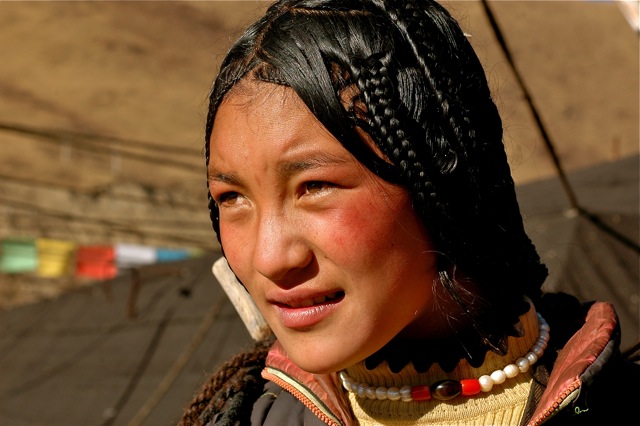
A generation of teenagers are growing up in a different landscape than their parents.
As usual, the nomadic expressions are simultaneously tangible, poignant, and incredibly metaphorical. Getting their thoughts on lands they know intimately; lands that their forefathers and mothers knew, is a precious necessity in any discussion about this ‘Third Pole’, the Tibetan Plateau.
For the last the 10 years, I’ve been asking the nomads little questions about their world, and what they see changing. What comes across clearly is that it isn’t necessarily change itself that is a problem, but more so the speed and dramatic nature of the change. Here is a little view of those perspectives.

About JeffFuchs
Having lived for a decade in Yunnan, Fuchs’ work has centred on indigenous mountain cultures, oral histories along with an obsessive interest in tea.
Fuchs is the author of 'The Ancient Tea Horse Road' (Viking-Penguin) and he was the subject of 'The Tea Explorer' documentary based on his exploration of the Tea Horse Road.
His photos and stories have appeared on three continents in publications such as Kyoto Journal, TRVL, and Outpost Magazine, as well as The Spanish Expedition Society, The Earth, Silkroad Foundation, The China Post Newspaper, The Toronto Star, The South China Morning Post, and UNESCO amongst others. Various pieces of his work are part of private collections in Europe, North America, and Asia. Fuchs served as Asian Editor at Large for five years at award-winning Outpost magazine.
Jeff has worked with schools and universities, giving talks on both the importance of oral traditions, tea and mountain cultures.
His recently released book ‘The Ancient Tea Horse Road’ (Penguin-Viking Publishers) details his 8-month groundbreaking journey traveling and chronicling one of the world’s great trade routes, The Tea Horse Road. Fuchs is the first westerner to have completed the entire route stretching almost six thousand kilometers through the Himalayas a dozen cultures.
Fuchs partnered with Wild China to create a journey along the Tea Horse Road which National Geographic Traveler called one of the "50 Trips of a Lifetime".
He is co-founder of Akahiao Nature Institute on the island of Hawai'i along with his wife, Julie Rogers.
