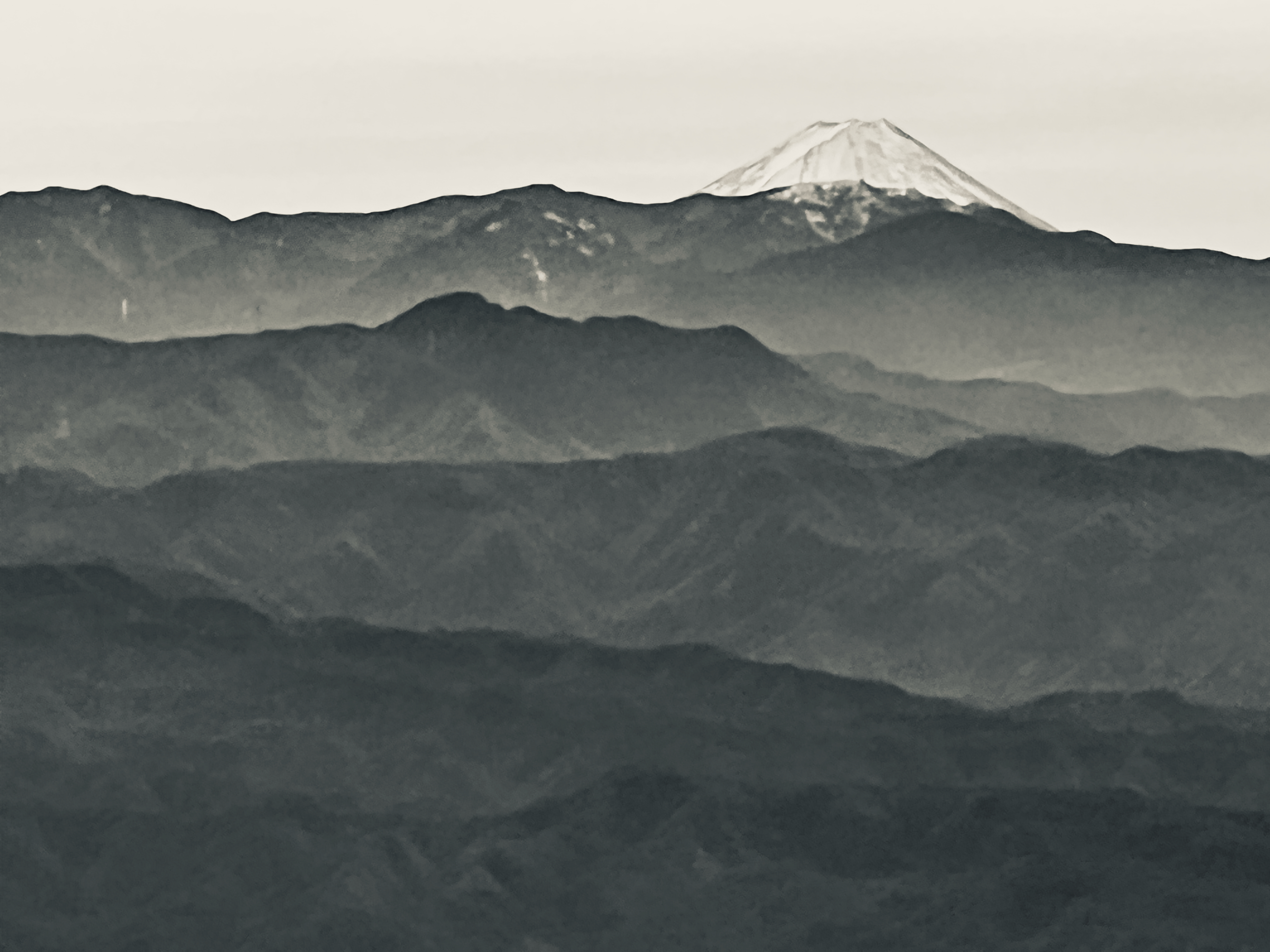
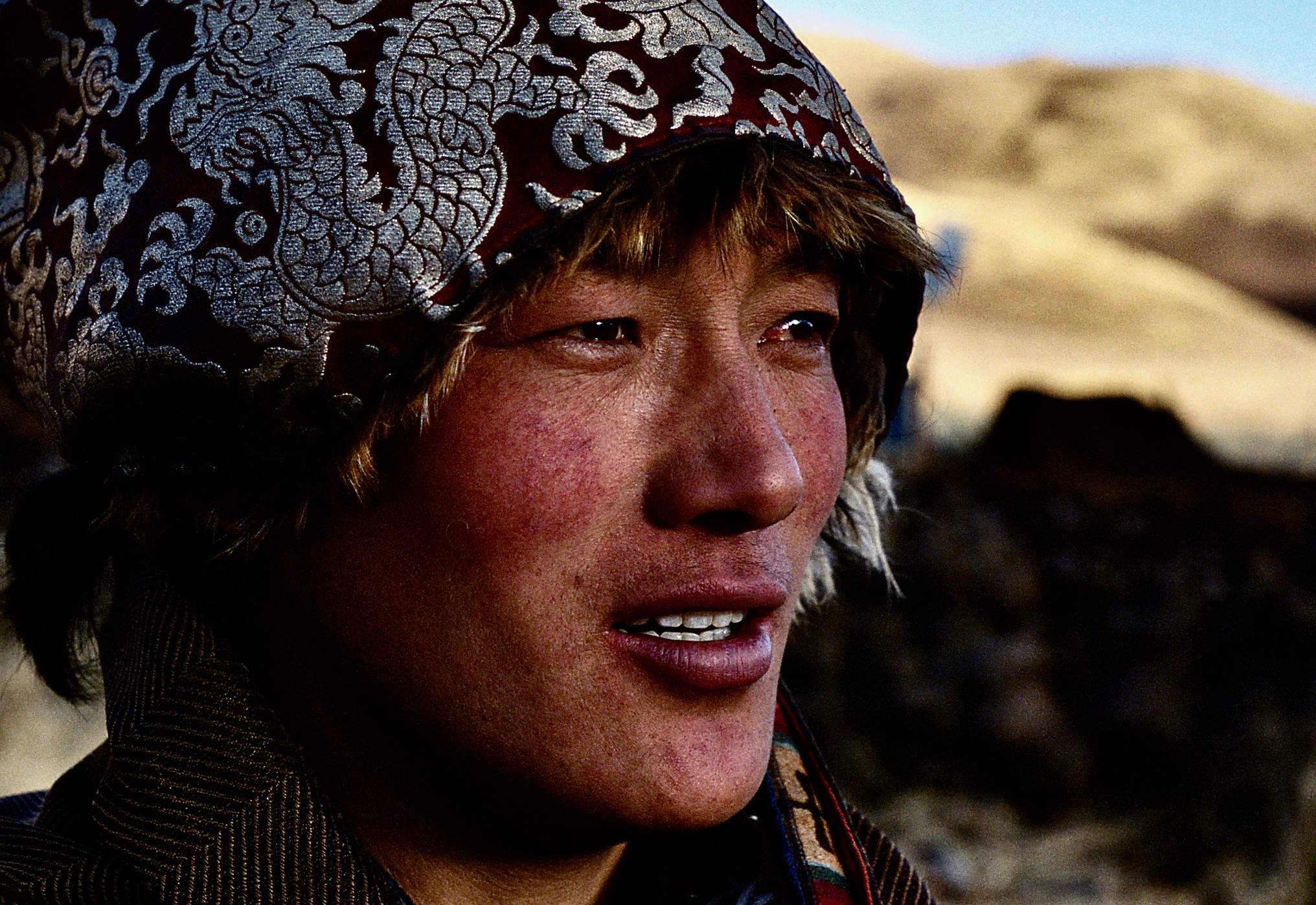
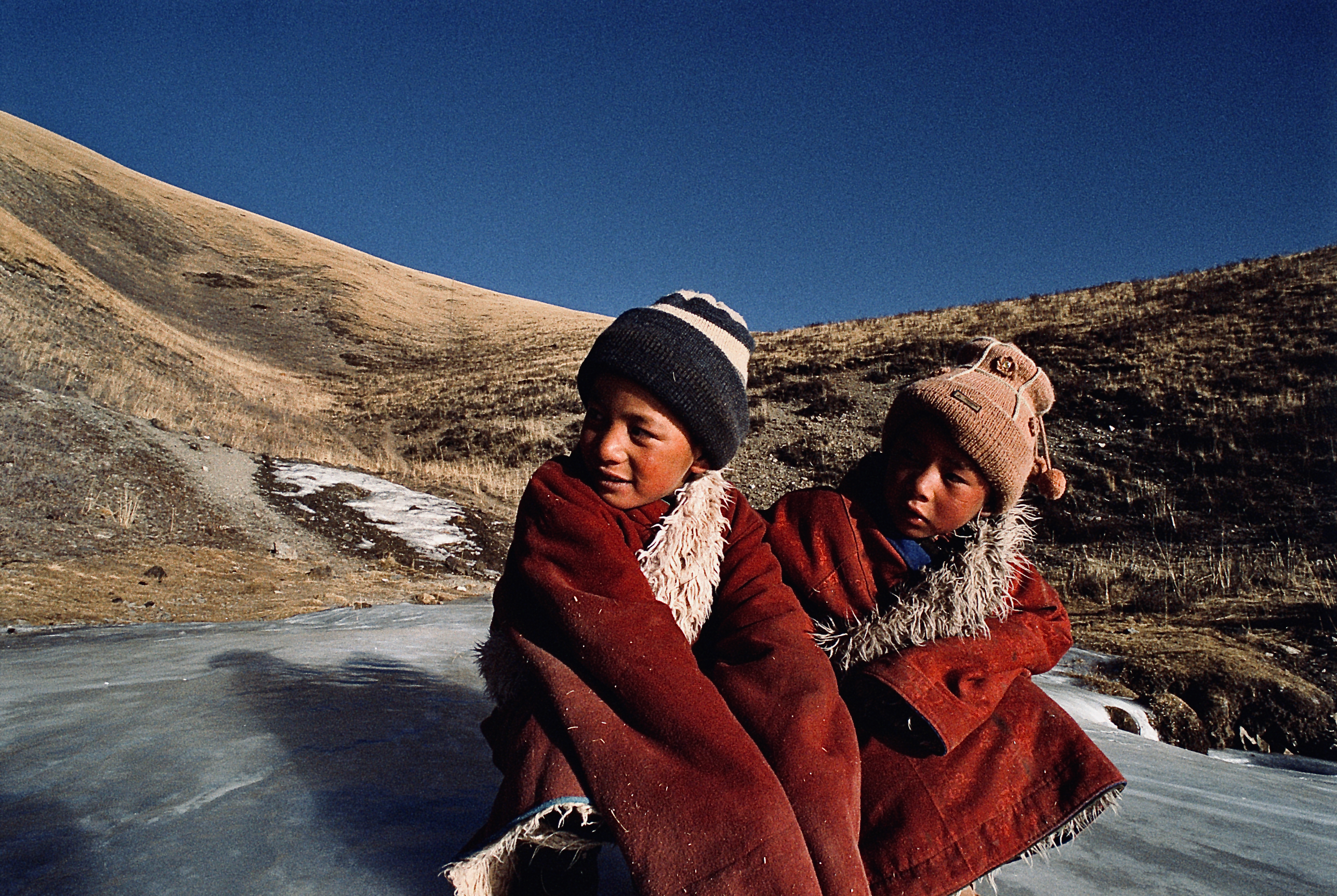
White from Above – Expedition Countdown

Departure date looms, white falls from above

One of the little towns that border our departure point

With three more days to go until departure on the Kawa Karpo expedition we’ve had a more than intense dump of snow from above, turning our town into something I wish it would be all year round: almost perfect.

We will leave the valley close to hear heading west

Beautiful as it is, it does add an edge and that natural wonder of unpredictability to our departure. What comes down hard here, will be coming down far more intensely upon the mountain passes that await us.

The way west on a day that does not relent

We will leave from a small “v” of a valley heading west out of the highland valley of Shangri-La (known to Tibetans as Gyalthang). Walking out to the area of our departure point, the entire floor of the land is a white sea, with only a few scattered yak hoofs dotting the floor.

And it clears briefly. One of the wonders of any day in the heights is that a change in the elements can come in minutes

The snow has in its eternal and rather welcome way muted all of the world’s sharp noises, barring the loyal canines.

Houses, mortals, four legged creatures and those that fly all welcome some white back...at least for the moment

Regardless of the departure day’s weather, the white brings a welcome reprieve from the dry sand coloured days. For myself it bodes well for a expedition through the mountains.

As the old traders of the Tea Horse Road used to say, “everyday begins and that is all you know when you wake up”.


Posted in Explorations, Mountains | Tagged , , , , , , , , , , , , , , | 2 Comments

A Tea fit for a Trek

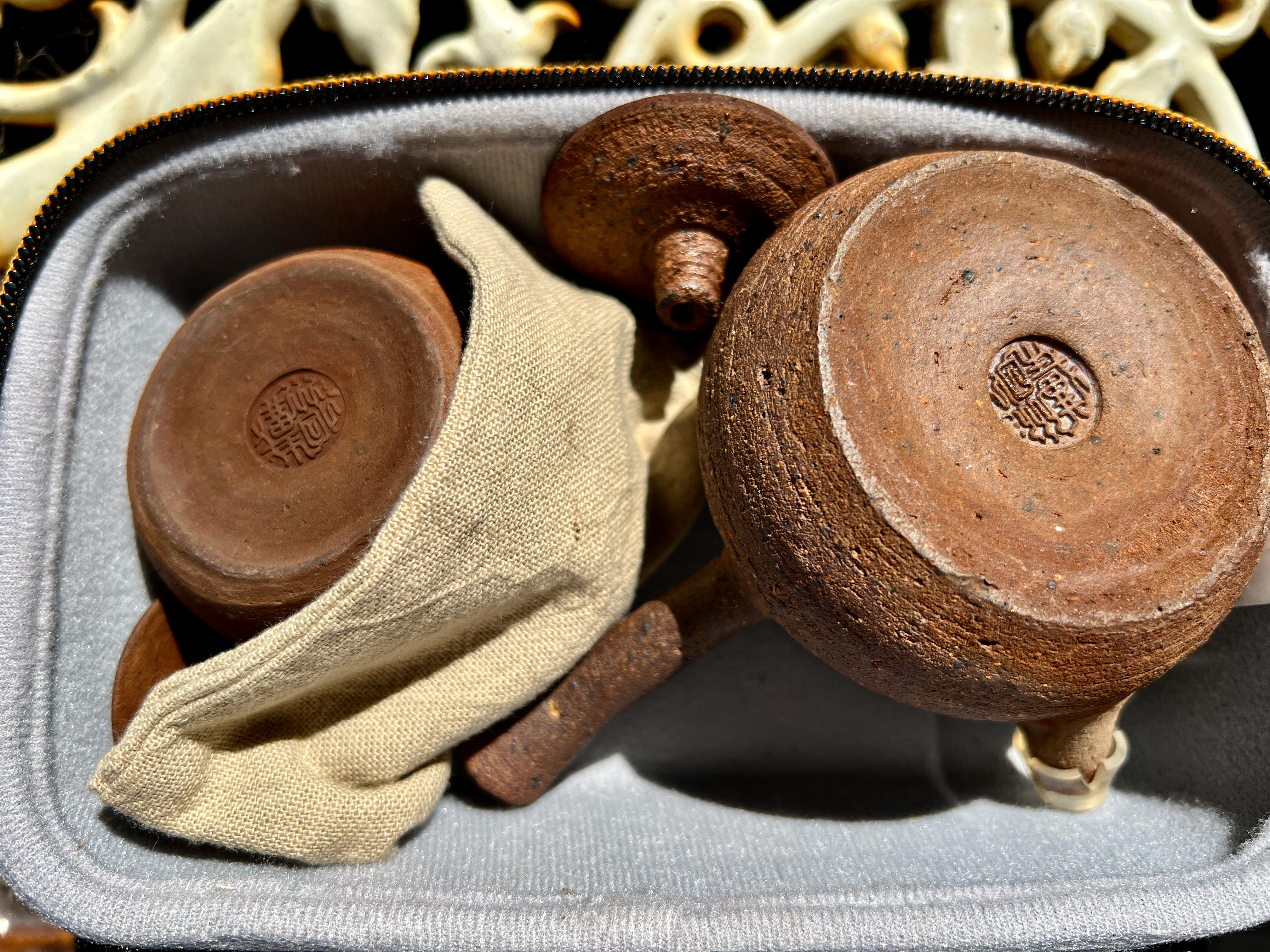
When selecting a tea for a mountain journey – and for every mountain journey there must be a tea – there is always a moment, a question: “which tea(s) for this particular trip?” The final selection signals not only a love for that particular tea, but it infers that I can live without all of the others that sit in chunks, cakes, and tight little nuggets within my treasure chests (which are simple cardboard boxes) here in Shangri-La.

One of my precious boxes of tea - an organized bit of happy green chaos

In the haste and anticipation of an upcoming journey (which begins on Feb 15th), there is often a tendency to overlook items – even after years of mountain departures. Seldom, though, has there been a time when a tea hasn’t been selected with care and perhaps a bit of neurosis.

The tea that will join for two weeks of mountains...

With most items that are packed for the mountains there is a well-honed system of ‘must haves’ which borders at times – to outsiders – as privation. Equipment, clothing and gear that ‘works’ (and has worked again and again) is unthinkingly rolled, coiled and folded into the rucksacks. Simplicity and precedent are two keywords in any of my selection decisions. Mountains are the perfect editors for those that observe its forces. Mountains and their almost schizophrenic sways between reckless beauty and stirring peril are the perfect (and unsympathetic) determiners of what can and does and what won’t work. They, in their severe and entrancing ways, demand that simplicity, respect and a good tea are taken into their corridors.

When selecting my little portable pleasures for a journey – and for me there is but one – there are always a few moments of almost neurotic deliberation on my part. That moment inevitably comes with the selection of a tea (and in some cases ‘teas’).

The challenger to the Bang Po...unsuccessful as it turned out

In the wonders of the above, of the heights – shale, scree, granite and white, there needs to be something that hits, that wakes, that inspires not only the taste buds but the entire body. This is where the selection becomes something almost clinical.

Every cup begins with it...a little water to reawaken for a first cup and a last time

Within my boxes of ‘collected works’ there are old teas that are treats, there are potent, pungent blasts that pleasantly annihilate anything else upon the palate and there are those go-to teas that are simply good. What is needed is a pleasurable fuel.

For this particular expedition – a rare unsullied portion of mountain route that bends northwest from here in Shangrila (Gyalthang) along a long-unused portion of the Ancient Tea Horse Road – we will be on a course of perpetual ups and downs. We will travel through the hot valleys and up into snow passes to a point below the north-face of Kawa Karpo. Tea’s underrated ability to sate thirst will be as important for the trip as its abilities to stimulate and force the blood and – by extension – the rest of the mortal form into dynamic action.

A fermented Puer, black, smooth and good for empty stomachs and indeed any digestive track that is under duress will join for certain. Nothing ‘special’ is required, no aged teas needed here with qualities that are professed but not delivered. What is required is something well made where I know the producers, the pickers and the source…always these three ‘musts’ haunt my tea-world.

In this case a Bada Puer will do. Both Bada’s green unfermented form and its dark artificially fermented brethren have long been a kind of go-to tea for me. Naturally more mild than some other Puers, it can be revved up and intensified with increased steeping times or amounts of leaves to give the system a jolt.

This tea in its fermented dark form is less of a reviving tea than it is a calming and soothing tea with its bit of earthen nuttiness.

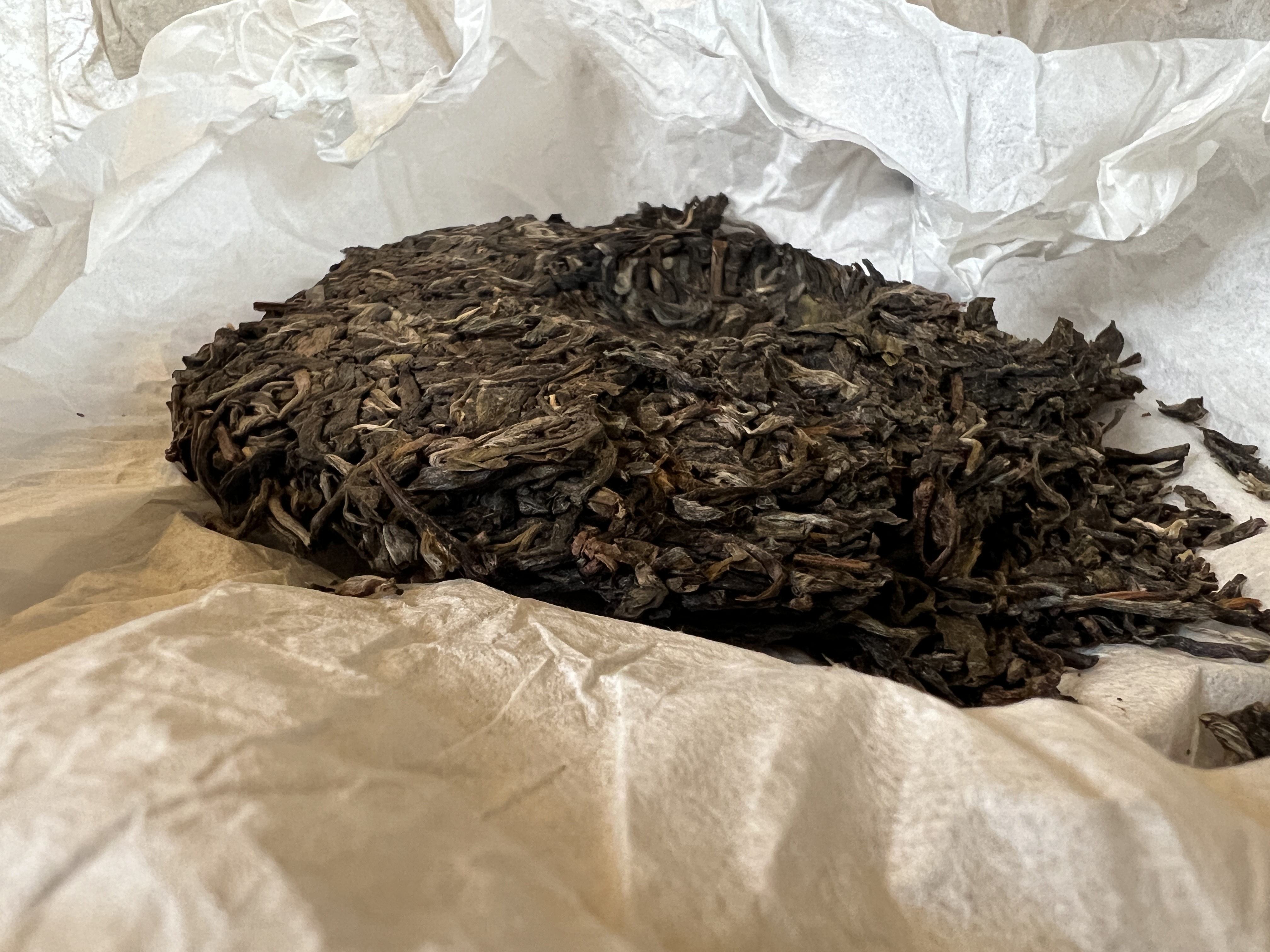
Amidst the various boxes of tea – every tea labeled in my fuddled scribbling with producer, date of harvest and exact harvesting locations – there are a few green unfermented teas that (for this trek at least) sing to me. I am looking for something that will shake the tongue with a kind of predictable power, something with some reckless energies. My eyes are looking for a very simple ‘Bang Po’ old town (there are two towns) – a small ‘un-exclusive’ village tea from the Nannuo area of southern Yunnan near Menghai. My recall of this tea is that it is inundated with raw power, simple virtues and a nice buzzy umph without stripping the tongue of its functions. Poking through I find the largely untouched remnants of the ‘Bang Po’ tea cake from early 2010 – my last pecking of it was about four months ago. It is lightly wrapped in a simple cloth-like white paper. No writing, none of the usual calligraphy or graffiti, no logos; nothing adorns the paper. It was purchased along with several others in the town from the growers and there is no need of elegant scripts on a good tea. Every family within the town picks from designated areas and to know the family is to know the region from where the tea comes.

The Bang Po's leaves are whole, not chopped or cut...it is always more difficult to hide a bad tea when the leaves are entire and whole

I put it aside and continue to scan through the box of delights. Shifting some cakes to the side I uncover a yet to be touched 250 gram ‘tuo’ or nest/ball of unfermented Puer from the Dali-Xiaguan area. There are three such ‘tuo’s’ tucked away in here and all were purchased in 2004, which was the year of harvest. During a tasting with a friend who recommended I buy the tea, he commented that this tea would never lose its ‘force’. It was vegetal and powerful with a long lingering cut in the mouth. I pick it out of its wrapping and decide that it is time to do a ‘taste-off’ to see which of these two teas will be taken (the slightly ‘off’ part of me is set on the fantasy of taking both).


Even with a couple of errant leaf pieces at the bottom, the Bang Po's colour is true and clear and free of any dreaded 'cloudiness'

The tasting doesn’t take long…the Bang Po destroying the Xiaguan Puer both with the strength (it is a younger more astringent tea) and with a taste that is at once comforting and ‘of the trees and earth’.  While the Xiaguan Puer still has bursts of goodness there is no chance of it going.

The resultant ball of Bang Po

This little selection complete, I put the Bang Po tea aside and nestle it into my other more traditional mountain needs. The moulded leaves from the ancient trees wrapped gently in the paper fit nicely within the hard lines of aluminum, the pastel coloured gortex, and the various materials not of the earth; but it remains as crucial to this traveler as any other imaginable piece of equipment. A tea thirst is not something to be trifled with.

Some of the very necessary necessaries for the trip, which includes a ragged cake of Bang P


Posted in Explorations, Mountains, Tea | Tagged , , , , , , , , , , | Leave a comment

Jeff Fuchs confirmed to present at Shanghai International Literary Festival

In a little bit of early-year news, I will speak and present at the 10th Annual Shanghai International Literary Festival (and will also be speaking at the Capital Literary Festival [Beijing] along with such notable figures as Amy Tan and Matt Groening. It will make for an intense shift from our proposed expedition in the mountains into the frenzy and hustle of the big cities. Hoping all of you who can do make it out for more of my obsessive ramblings about the old trade routes through the mountains. For more information the links below give a nice little spread:

facebook

http://www.smartshanghai.com/event/10756

http://www.thatsmags.com/beijing/events/detail/925/capital-literary-festival

One of my favourite sites: the often understated but fiercely mule caravan which was for so much of the Himalayas and Yunnan a common and crucial site.

Posted in Explorations, Media, Mountains, Tea | Tagged , , , , , , , , , , , , | Leave a comment

Kawa Karpo Expedition Updates


The ‘routes through the sky’ have long brought faith, economics and migration together in an unending stream of life

Our expedition has been generously joined by additional sponsorship and assistance from Canada’s  Zoomermedia, travelling ‘off the beaten path’ gurus  WildChina and now Canada’s own GV snowshoes.

For centuries mule, mortals and mountains have collided and cooperated along the great trade routes at the top of the world

We are greatly humbled and encouraged that an expedition of this nature – a journey along an ancient pilgrimage-trade route, a journey to recapture and peek into an ancient route when mules and men (and mountains) were inseparable – warrants support. We acknowledge and thank all who have contributed in anyway to bringing a vital cultural icon of Himalayan travel and life back, if ever so briefly, into the present.

Our ultimate destination, the daunting and magnificent Shola – the snow pass that according to locals (and my own recollections) “has two faces” lying just north of the mighty Kawa Karpo
Posted in Explorations, Media, Mountains | Tagged , , , , , , , , , , , , , , , , , , , , , , , , | Leave a comment

Expedition February 2012 – Ancient Trade Route to Sacred Mountain

One of the sites our eyes will take in upon the trek

Back to the comforting cold and silence of ‘Shangrila’ here in northwestern Yunnan in preparation for another Outpost Magazine exclusive. Revo Polarized sunglasses, Mountain Hardwear, and our own Jalamteas are sponsoring (and happily fuelling) a ‘western first’ along an ancient trade route here in Yunnan. Unusually intense snowfall this winter is going to make this a very winter-heavy expedition. Departure date is mid-February and the journey will include two venerable mountain guides who are local ‘mountain goats’. Updates to follow as well as an official press release…another journey to trace what are fast becoming disappearing legends – the ancient Himalayan trade routes.

Never far away in this part of the world are the crucial 'people' and their memories of the trade routes. It is the memories that give any journey its lifeblood.

Posted in Explorations, Media, Mountains, Tea | Tagged , , , , , , , , , , , , , , , , , , , | 8 Comments

Bang Ma Sip

A little recollection of being introduced to Bang Ma tea; it contentedly remains a tea by my side on every journey since discovering it.


There are moments that hit when the head and heart – and in this particular case the taste buds – gel in union, deciding to agree…even if just for the moment.

One of the many mist coated tea paths burrowing into and over Nannuo Mountain in southern Yunnan

My little sitting spot perched on an uneven log seems a rather simple place for this cerebral ‘coming together’, but one cannot plan nor prepare for these moments. A tea table, long stained from decades of daily ritual to the green leaf, sits lower still.  Glass cups litter the surface of the table in a random kind of homage to the moment, the time and of course to the tea.

The back of me with tea somewhere in the distance beckoning. Along the route through the Nannuo Mountains

Our room is a centre point of the small elevated house and everything has the narcotic aroma of wet wood. If the tea is exulted then surely our little tea table is a very under-whelming altar, but that is exactly how it should be.

The little tea table that was our 'base of operations' for what would be four hours of tea drinking and culminated in a formidable tea buzz

I along with five others hunch in various positions, pitched forward with unblinking eyes intent on a ceremony we’ve all seen countless times before. Cups, tea leaves by the handful, a flared serving cup (gai bei) and the restless legs of dedicated tea drinkers all surround the little table. It has been this way for hours but suddenly the intensity level has been notched up just as the happy chatter is turned down. Everything has changed with a serving of a tea of particular qualities that even now stamp their authority on the proceedings with something undeniable. This moment of silence has been brought on by sip. It is the kind of sip that arrests things in mid motion and cuts conversations into ribbons. The sip and what it has taken into the mouth has brought clarity, or perhaps reminded us that there are still teas that can do this.

Another tea table in the same town littered with all of the necessities. Cups, bowls...what is missing from view is the thirst

Tea matron Lu keeps a degree of decency in the small simple room – her brightly coloured nails seem at once kitsch and ridiculous within our surroundings, but she has managed to keep tea flowing for the past hours – through lunch – and no one is even remotely interested in interrupting her. Her ritual has been the same up until now, but with more chatter issuing from her. Now, she too has buttoned up. The only sounds she makes is the introduction of a new tea. Here in these tea stained lands people are judged by their tea or the tea they serve. Recollecting the moment, it was only the second time I had ever met Lu and the first time to try this Bang Ma, a tea that would become a staple in my days and remains still.
My own ‘moment’ of silence upon trying the Bang ma seems a collective moment, for everyone who sits with me or around me has been silenced as well. We’ve just been given our first shot of a Spring 2009 Bang Ma green Puerh and it is a sip which has somehow sealed the room in a kind of vacuum. Chatter has ebbed, eyes have refocused and Lu’s eyes just briefly gaze up as though she has deliberately created the moment and knows exactly the response.

The room, my tea cup, Lu, myself and the Bang Ma tea are all within a home west of Jinghong in Xishuangbanna, deep in southern Yunnan, and around us a vault of silent green insulates our proceedings. South of the main road that passes the acclaimed Nannuo Mountains – of tea fame – we have taken narrow cement road that doesn’t belong on a mountain up through a series of switchbacks. Then we walk and we walk.

Bang Ma in the loose, dry format

Nannuo Mountain is a loose green range of mountains rather than one simple mound. Within its holdings there are many little towns that grow tea, and deep within Bang Ma is one. It is rare to find fermented, ‘cooked’ black Puerhs in the regions that grow so much of the classic big leafed ‘assamica’. Here teas are plucked, withered, fried and dried…and then of course consumed, though many will say that a good local ‘unfermented’ (sheng) Puerh it is at its optimal ‘taste stage’ when it is around 1-2 years ‘old’ (picked and created). This though would come with a caveat, as I’ve often heard from local drinkers “Good teas are good teas”.

Some of the dark smouldering beauty that is the forest around the Nannuo area

Around our little shack cicadas run their mantras high in the trees and there are the squawks of the cavernous forests around. Soft humid mist remains and dilutes everything to mushy outlines even now in the early hours of afternoon. Outlines at this point don’t matter as for the very vital ‘now’ what is transfixing is the Bang Ma tea we sip. Coming to the source means guaranteeing you drink of the tea that is grown at the source. The source here in the mountains is that great green landscape outside around us. Within it lie entire forests of ancient tea trees with leaves as large as feet, and branches as thick as arms. Where we sit….only kilometres from Bang Ma near the great forests the tea trees are close brethren, but the centuries old tea trees fortunes have mirrored the villages’, and the ‘fortunes’ relatively speaking have been good. Within the mountains strongholds of ‘good tea mountains’ teas are now purchased in bulk and contribute a significant portion of income to the families.
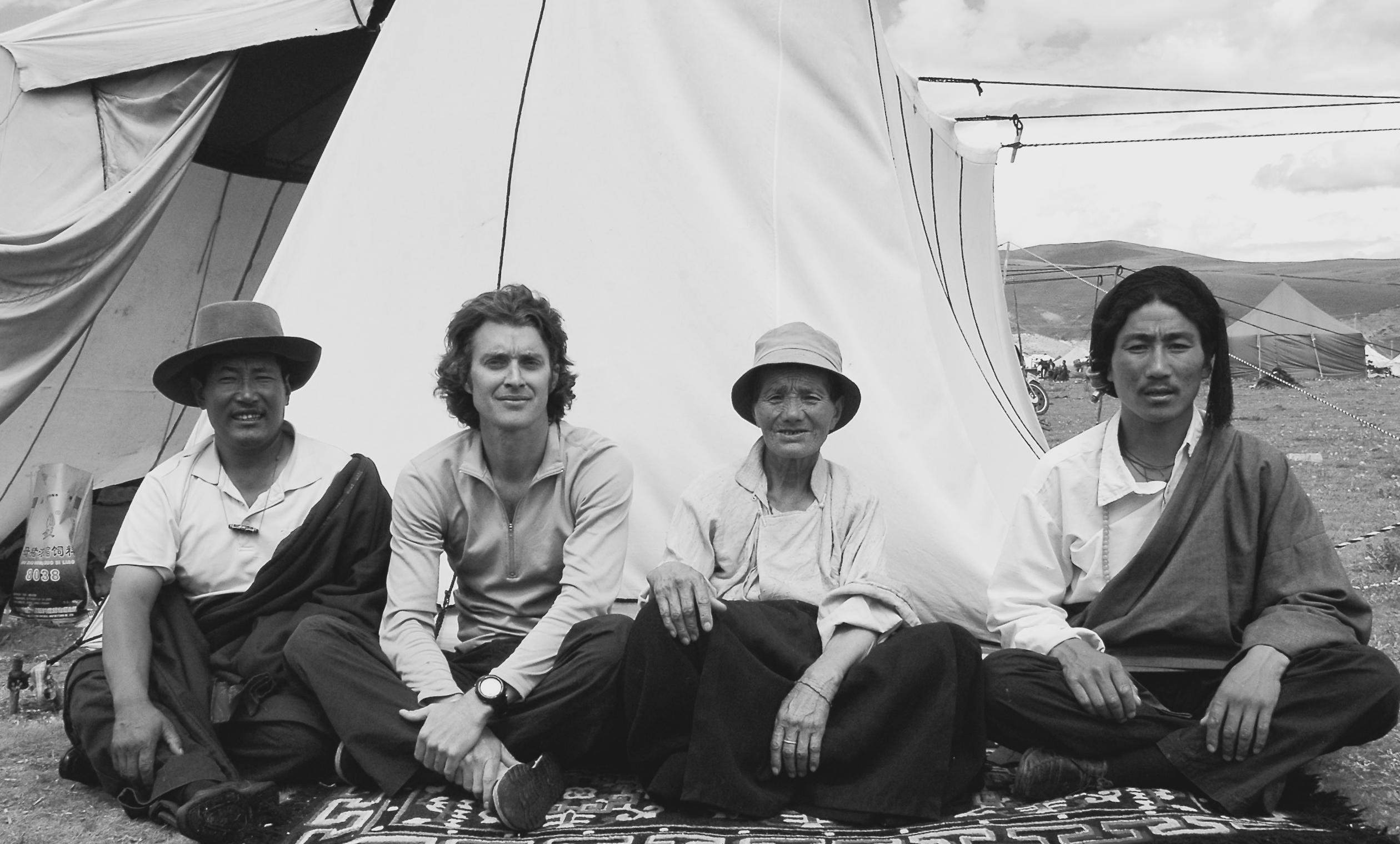
A tea 'station' deep within Nannuo Mountain near Bang Ma. Thatched huts provide shelter and storage areas for tea harvesters who are working a particular area. The leaves must be sheltered from the sun

Our group is made up of three locals, myself, Lu and another tea-starved friend from further west in Yunnan. This tea session has taken in four teas thus far, all green pungent Puerhs from small towns around where we sit, all with their own qualities and ‘highs’; but with this new Bang Ma something has changed.

The tea has managed – in two brief cups – to cut through the tongues layers and infuse the entire mouth with itself – wiping away all predecessors with strength and a long hit of subtle vegetals that also cut through the previous teas. With many teas (and very much depending on where one has purchased it from) a name means nothing as the tea one sips may be from four or five different areas ‘not’ even within the town or region that is purportedly named after.

Though the leaves and flavour are pure green a concentrated cup of Bang Ma comes out dark apricot in colour and leaves a potent impression

This Bang Ma that has us entranced is entirely local and of the earth – picked, harvested, ‘created’ entirely within sight of the town. With Lu there has never been a question of a tea’s authenticity. More often the question is where to get more of it. I have been told more than once though that some tea companies claim their teas are from Nannuo or a specific town or region, go so far as to print and advertise their teas as being such, without not so much as a company person having ever stepped foot in an area. It is one of the ugly but inevitable aspects of the tea world. In villages in this area there are ‘watchmen’ who keep eyes upon all visitors and vehicles making their way into the folds of tea-land.

Getting to the tea mountains required a few necessary stops to savour local delicacies like these fresh water fish from the Dai minority - who also have their own ancient history with tea

They care not so much about what is brought in but rather what is taken out. Not just anyone can saunter in and by up a huge amount of tea. You visit with a friend who knows someone local. In this way teas, methods and integrity are kept (or at least attempted to be kept). When we arrived to the town we stepped through an ancient bamboo gate with silver foil and prehistoric looking carved animals – part of the animistic legacy here – and just beyond the gate two villagers watched quietly before warmly greeting Lu and the three locals.

Throughout the tea regions the sacred Banyan trees reach skyward

This Bang Ma tea moment that we are happily lodged in at the moment isn’t overwhelmed by anything but the tea and that is the point. Nothing other than cups, leaves and lips are required. Lu’s ornately painted nails are about the most extravagant thing within kilometres as she prepares yet another much desired round of Bang Ma.

As we slurp back a third and fourth cup, the silence loosens its grip but only slightly. Every sip reinforces the quality of the tea. It is strong and almost forceful but even though astringent, with every waft, sip and tingle there is flavour and it finishes having put a stamp of authority upon the entire mouth and throat. It has the strength to push aside our previous hours of teas and make an impact that brings up the level of enjoyment a first cup does. It is hard what to make of a tea like this of its sheer impact. Either the previous teas – which were good – are not in fact good; or that this tea is simply in another league.

Bang Ma tea leaves ready for their third infusion...what many call the 'moment of truth' for a tea

Being gentle skeptics as opposed to reckless ones, all of us decide that this tea is simply in another league. It is at this point that Lu speaks in her particular quick-tongued way that the Bang Ma is higher in sugar content than many teas – the leaves themselves – and that this blends well with the strength and purity of the product creating a lasting flavour. For locals (within southern Yunnan’s tea hubs) Bang Ma is a classic and spring editions are sought after and costly.

Many informal tea stalls line the road between Jinghong and Menghai selling very local teas from the source. Often great deals are to be had with the added bonus of interaction with locals, keeping the proceedings spontaneous. If one wants to sample, you often have to visit the home of the vendor

Simply prying this tea from so deep within Nannuo Mountain’s cavities is a feat; up until recently it required day-long journeys by foot lugging tea to a roadway and then transported on into tea centres. Just arriving here our group had the previous day driven from Jinghong through three indigenous strongholds – all who have tea culture (and significant amounts of tea itself) running through its blood – walked along warm mountain paths, driven again and finally walked into this little town…and we’re still not in Bang Ma – but, we have indulged in its tea.

The slow speed of life continues into dusk in southern Yunnan when talk and business of tea settles down

One of the local men, who is our co-our host and in who’s home we now sit, exhales loudly in an almost resigned way. Though he is not from Bang Ma he also creates teas (one of which we have tried today) but the name of the tea (for now at least) will never have the impact of the Bang Ma. This bit of knowledge has only just come out and there is a gentle bit of embarrassed fidgeting from all of us knowing this. But, he appears oblivious to his own tea’s underwhelming performance against the heralded Bang Ma.

Still magnificent even in their sodden 'afterlife' the Bang Ma leaves make way for a newer batch of leaves

He tells us in a soft voice that even among the Hani people’s tea strongholds, Bang Ma is a special tea. When pushed as to why it ranks so highly he responds simply saying that “Bang Ma has traditionally been isolated so their methods and product has remained unchanged by the tea markets up until very recently. They start with great soil, drainage and ancient tea trees and keep it simple. They didn’t get caught up in trends and their ancient trees (gu shu) are some of the most coveted.”

In these areas; areas that for me sum up all that is good in tea culture and consumption, it seems always to come down to this green version of simple. Earth, attention to detail and a great ‘base’ product cannot be denied. Wrapping, plaudits, apparent quality and gimmicks are usually (but not always) laid bare when it comes to the sip.

At this point he takes a flared tea cup and dumps the used Bang Ma tea remnants onto the table nimbly picking up leaves with his large fingers and studying the leaves’ pliancy, the stems, everything… “You see the leaves? Nubile and young”. The young end buds (usually seen as white curled leaves within dry leaves) are laden with all of tea’s wonder-chemistry and contribute those light hints and subtle flavours while the bigger leaves give the tea an anchor of strength (or in many cases no anchor at all).

Strolling outside later on, for what was to be a very brief break from our liquid friend, the insipient humid mists seem to have been swept out of the little town by drafts coming from the west. The wet forests around us seem to inhale deep from the air currents. Green silent walls with ancient tea trees sewn in, the entire area seems to watch from its dark perspective with a kind of calm. The indigenous Hani dwellers who have long been entrusted to geographies of tea also seem to keep their lives simple. Hens rush around for errant bugs and corn kernels, lean and patient sly-eyed dogs lie languidly and the thatched huts all appear content with their lot in life. The dark complexions of the locals, their glowering eyes and their neat movements speak of that enviable mix of understanding one’s environment and using it to create a masterpiece.

One of the many faces relating to the south of Yunnan, where indigenous culture is inseparable from tea culture

Lu walks past me in a tiny centre square of the village and tells me to be next door – another local home – in fifteen minutes for more tea.


Posted in Explorations, Tea | Tagged , , , , , , , , , , , , , , , , , , , | Leave a comment

Ascend to End


Looking northwards where all things begin - the mountains

Traders, pilgrims – travelers, who utilized their legs and lungs through the mountain corridors of he Himalayas often tell tales of the mountains’ ‘natural order’, of the inevitable paths that lead and have led through the walls of stone. They defend the mountains and speak of an often brutal balance; there is and always has been a kind of fateful confidence that the ‘high’ lands are full of answers.

Rocks, clouds and wind all flow in the heights

Far from simply being barriers and hulking uneven walls, mountains always provide for the intrepid, and the mountain borne peoples are nothing if not forceful in their own searches. Here the world of spirits takes a second row to the world of form. An exit, sometimes snowbound, is always to be found and in some typical wisdom of eastern Tibet “if one can get there, one can return from there”. All things and beings pay homage to the shapes, the oxygen starved air and of course to the winds.

As the east-west running Himalayas hit Yunnan and Sichuan on their far eastern frontier they meet ranges that run counter; north-south running ridges that cut and slice the land into valleys and rocky highlands.

Altitude gives a perspective of the mighty world below

West of my sparse ‘home’ in Zhongdian lies a range which has long remained present in the eye. Its understated curves run along our western flank. Heading north a line of dozens of kilometres reaches and curves towards the borders of Yunnan, Myanmar and Tibet proper.

December’s stolid greys have moved in and winds do what they do up here: they rule with patient, unrelenting power. They don’t so much punch as they do slowly ebb away at solid objects with steady force. Snow hasn’t yet thrown the full brunt of its challenging beauty into our little worlds of valleys and peaks. It remains in leftover patches. In the mountains it is the seasons that open and close the gateways in and out; it is the seasons that shut down sounds and senses and it is winter which brings all into solitary focus.
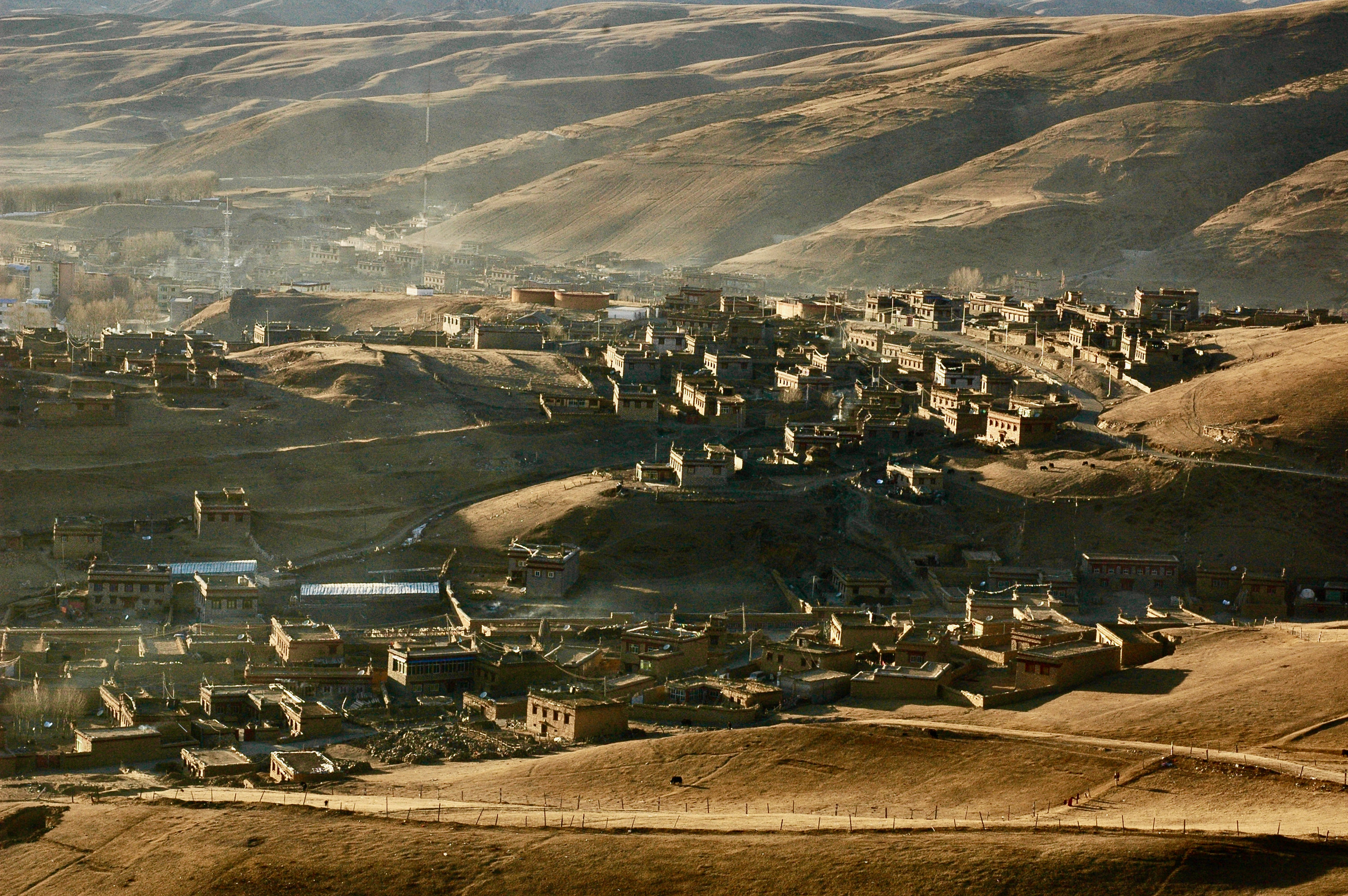
Looking down into a valley of snow and stone

My own ritual at this time of year before the inevitable bit of time away is to do a last trek, an ascent somewhere ‘up’ to pay respects, sniff the incoming season of cold and reach in a bit further into areas that remain close but unexplored. It is also the ideal way to bid an old year farewell. Inevitably, these little jaunts are solo ‘projects’ which allow for a maximum degree of impetuous and selfish wanderlust. It is this inconspicuous line of stone to the west of Zhongdian that I see most days that finally draws me in for the December farewell.

Though my own legs have taken me into this ridge of stone in the past, I’ve long heard from traders of a path that leads west across to Tuo-ding – a valley town that doesn’t suffer the winter effects basking in the perpetual hot winds of the river valleys.

In Tibetan, 'nup' is west and it is to the west that my eyes and legs took the rest of me. Looking towards Myanmar and Tibet

Zhongdian’s ancient name of ‘Gyalthang’ makes reference to a ‘thang/tang’ (the suffix) or great grassland – in this case a 3300 metre grassland that splays outward in winter-dry topes and meandering waterways. The morning departure takes leave of this elevated flatland at close to 9 am as a morning light tries its luck to emerge.

West of Napa Lake a dozen short kilometres west of Zhongdian are logging paths veering up. It is one of these that I start upon. Most of the paths are wide with a deep trough or rut in the middle – logging routes where couples of yak will drag massive logs down from the heights in a wonderful ritual of plodding and power. Logs, sometimes 15 metres long will be used to build the traditional Tibetan structures of the region. These paths also lead into the mountains’ summer herding pastures where locals will spend the ‘hot’ season tending to their herds.

Looking south towards a new mountain range that these eyes have never seen...such are the heights - unveiling as they challenge.

Stone and its dull surface has a way of reflecting the sky, or simply sucking up all of the light. The clouds are being created above this line of stone as I reach up further. Zhongdian (its ‘purchased’ name Shangrila) sits in a dull sunlight behind and to the east of me but as I climb it as though I am climbing into an amphitheatre of mood bending purple-grey hues…and wind.  The ‘Shangrila’ is long gone.

Huge scars appear on the surface where the elements have torn into

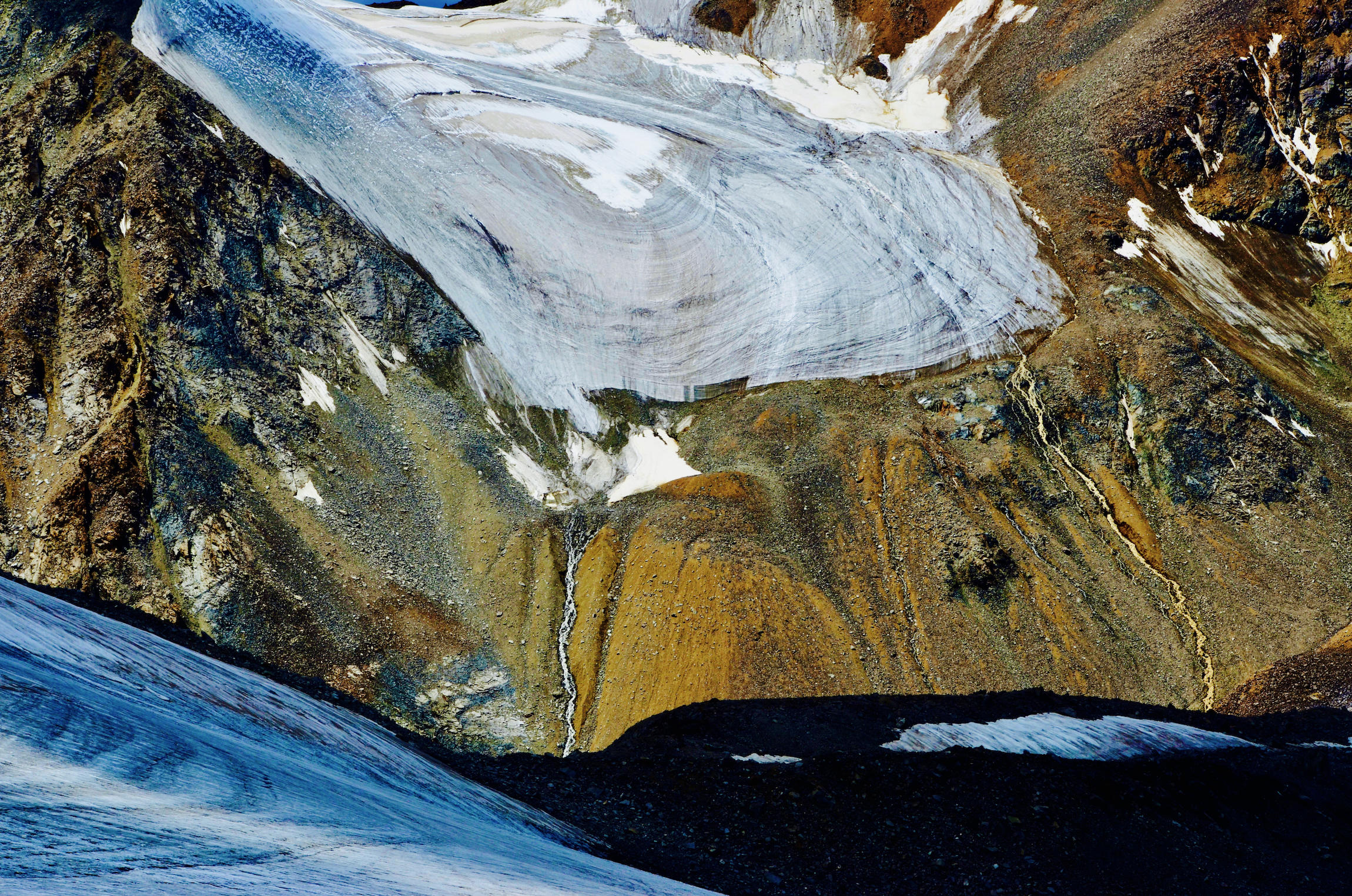
The element that the Tibetans know as “loong”, (wind) finds its setting of expression here amidst the heights shrieking over the lands. Crossing along a northern ledge directly above a pitch infested by scree, I can see that entire rock faces coloured by the white of past snows; it is a testament to these regions at four thousand metres how they change completely from season to season. Everything amid this lonely arid zone is touched and affected by everything else.

What I know of in these lands – portions and swathes of land previously encased in white – have unleashed their earth tones in wisps and swirls. The land is laid bare. What is seen as a simple line of hills – once penetrated – gives way to enormous gulleys, sheer drops and shimmering rows of peeks. Many times with limited sightlines I have seen only the immediate, a rock, a drift or a fuzzy funnel of light that hints at what is to come. On this day all is spread on a 360 degree platter of change creates an almost schizophrenic horizon.

To get to the pass - or where I think the old pass is - I must first walk along ridges which have the winter's first touches upon them

Trees have long since disappeared as the alpine treeline is below somewhere; a a line I passed hours ago. Reference points are snow capped peaks, lonely crags and gnarled and indestructible rhododendron shrubs. They alone amongst the plant world seem at home and still even a little opulent. At this time of year in early December everything is shackled by the winds and oncoming winter but it is the time to savour the heights as things have been edited down to a simplified essence and a few raw constants. Nothing distracts from the cold, no nook can shelter the body. In small valley pockets bent wooden huts sit empty in wait for the summer, which surely must come but even they look barren and forgotten.

A spectacular valley that leads into another world is also and entrance...it is along valley floors and river beds that many of the ancient trade routes follow

Geography here on this day has become a series of abstracts with a soundtrack of buffeting wind. Heading further west a small curved valley of snow gives way to series of sculpted wedges – somehow it is a path – or more accurately a series of stops that seem linked.

Storm clouds gather from the south, or so it seems. They actually are driven in from the west and the Himalayas, whereby they rise with any significant incline and unleash their moods

Sharp valleys that fall off have the light blue sheen of old ice upon them; the sun’s rays unable to permeate for long enough to make an impression. Shoulders of rock hunch in ancient formations and I wonder if somehow all of this land around me is waiting for something. It is a paradise for the lonely and impact-starved. Turning the head can open up an entirely new vista of a landscape just seen. It is that, perhaps more than anything is the mountain’s great gift. Its ability to offer everything and nothing in a glance.

When the skies decide to open up, they can momentarily convince one of change...in this case the 'change' was but a bright moment

Up amid currents of air higher than I, a solitary vulture peers over a terrain that must seem insignificant. Carving the heights its wings need not move. Odd cairns of rock stand piled up as little testaments to the animist gods and to a time and people that took time.

A small offering of stone for the mountain gods

A rounded hump appears ahead, dominating even the distant snowcaps that flutter in and our of site with passing clouds. This hump appears as an entire mountain of smooth rounded scree with touches of ice sitting upon its edges. Wedged in between the enormous round mound and a sharper set of peaks is a depression and in that depression is a path, which shoots downwards into an enormous valley. It is here that the villagers, traders and pilgrims from further west and from Gyalthang itself would cruise over the mountains into further valleys only to re-cross yet again. Here is the decline and the inevitable dip back into the populated valleys that I’ve long heard of.

Finally the pass that old Norbu spoke of so many times a pass that led west into the valley towns. The route itself linked up one massive valley with the Zhongdian 'grasslands'

Winds here pick up their hum, gaining force with the open expanses before them. The wind sings of itself and its magnificence…it sings of the fact that up here it is content to compete with itself.

A mass bank of temperamental clouds sits just above, letting in bursts of cold light. It is this grand expanse of brittle and seething space with its lack of visible movement that I have come for. Seeing the old trade path that wanders down makes the journey that little bit more perfect – it is where an old trader, Norbu, said it would be (in typical local trader speak), “beyond the hills, beyond a tea break, before you go down”.

Light starts to fade in the winter afternoon - still hinting though of places yet to see

He failed to mention the wind…

Posted in Explorations, Mountains | Tagged , , , , , , , , , , , , , , , , , , | 2 Comments

Feature Article in Outpost Magazine – Tsa’lam – The nomadic route of salt.

To the entire creative team at Outpost Magazine, Canada’s award-winning adventure travel magazine who helped turn the Tsa’lam feature into one of their classics – a big thank you. To Wild China, whose patient support and award aided and smoothed the road to actually getting it done (the crucial part).  The Salt Road feature in Outpost Magazine is now out in Canada and available to order.

In honour of the feature article, posting some favourite moments that rekindle the ‘feel’ (and visuals) of the magnificent and humbling Tsa’lam – Salt Road. We also pay tribute to our little fighting terrier who joined, slept and combated with us…see below

Our little fighting terrier Fritz, who stuck with us (and slept with me) and demolished every being that gave us a moment of grief. We salute you

Moments are sometimes the best representatives as they are just that – moments of fancy, of a little pain and of what nature can offer up

One of our four-legged comrades gives a very unambiguous feeling of that morning thing...

 A lake at 4 km’s into the sky that remains silent
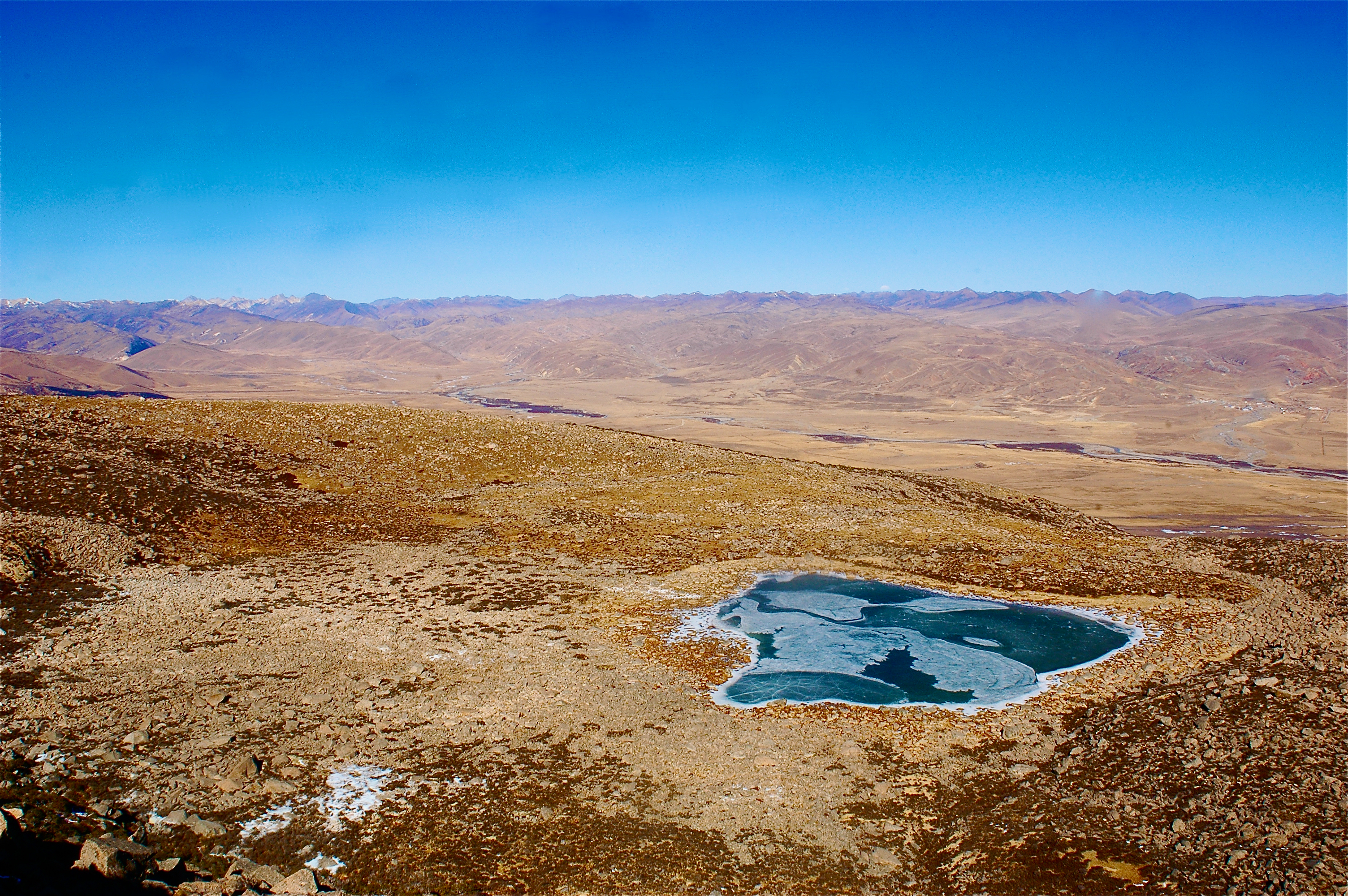
A lake at 4 km's in the sky entrances as much as any sea

 A mastiff whose ominous presence and blazing eyes belies a timid constitution

One of our unofficial 'honour guards' - a Tibetan Mastiff that decided that our journey just might tickle his fancy

Temperatures that quicken the pulse and turbo-charge changes of clothing

Cold made changes of clothes brief and desperate things done in a blur of noise. Here, one of my two changes on the Amne Machin section

 Winds that silence and valleys that permeate

Michael struts the stuff in a valley of the gods

 Soft landings, hard landings and just landing at all

The relief of impact and making it safely across I still am not sure the foot that has 'arrived' has in fact made it...it has

 Ending looks…”are we done”?

Michael gives me the "I know it's over" look of joyous-desparation

 The simple and underrated feeling of autonomy in landscapes that wither the body

Nothing beats the mornings for beauty...nor freezing

 That last bit of land before calling it done

Our little moving home takes its last steps from beneath the south face of Amne Machin

Posted in Explorations, Media, Mountains | Tagged , , , , , , , , , , , , , , , , , | 2 Comments

An Ascent, An End

That which stuns, awes...looking at a wall within the Kawa Karpo range

Skies, snow and peaks have replaced moss-laden trees and the mind clears along with this parting of the eyes’ peripheral. All of a sudden the introspection that has come with days of tunneling through gargoyle forests and wandering mosses gets broken up with blue and snow. It is a breakthrough of the kind that regenerates the blood in quick order.

A valley of ice introduces another world that exists within the mountains

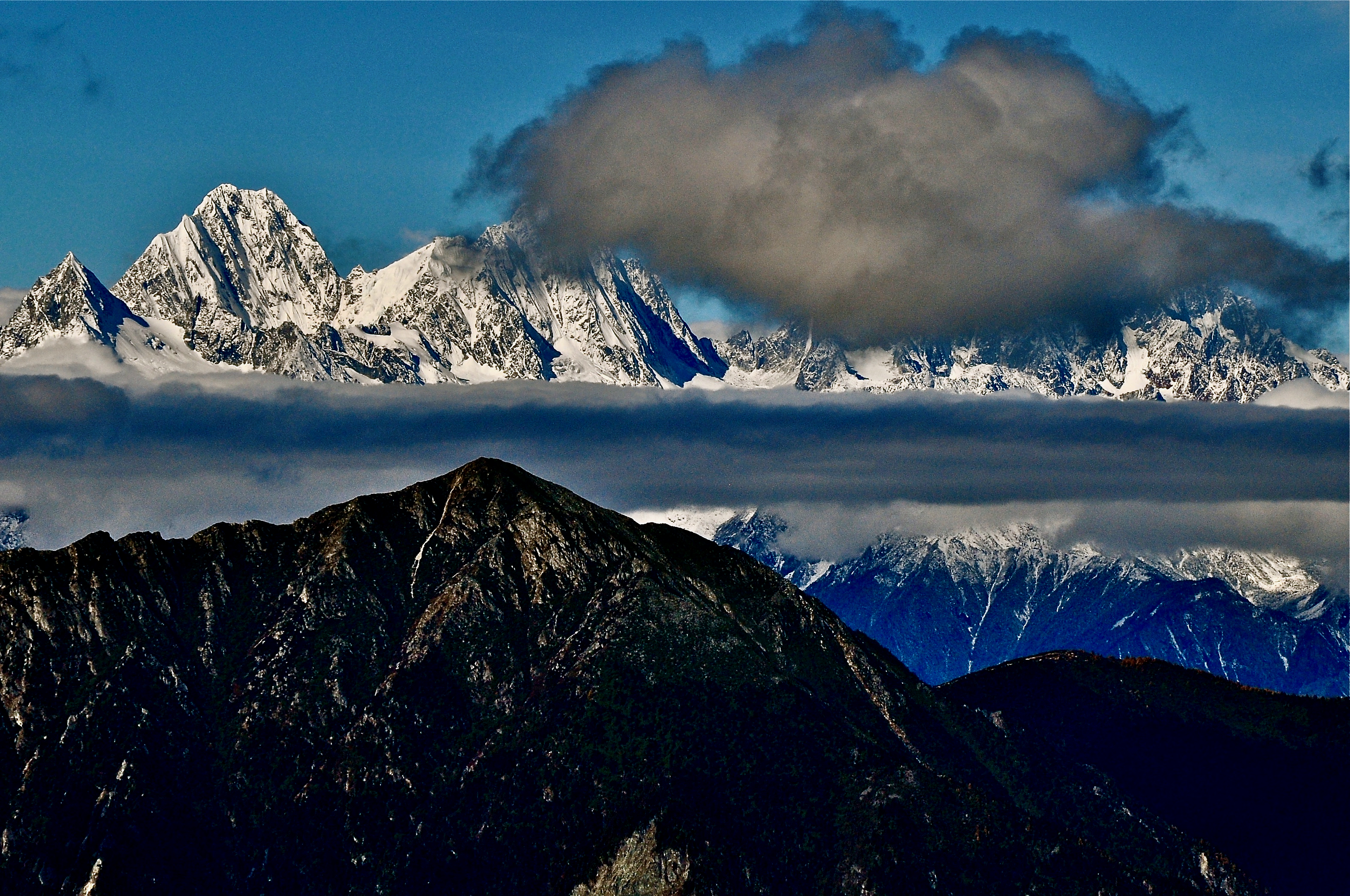
Morning was a brittle emergence into the world above four thousand metres, with Dorje lighting up three cigarettes before emerging from his yellow sleeping bag. Our faces have the hard swollen masks that minus 15 degrees Celsius brings. Dawn is a still, cold purple hue. A thermos of tea in mitt, I turn and the world turns too, in both shade and shape. The night before we camped with only wisps of views; this morning the world has turned. To the south of our little camp is the sumptuous wall of snow and stone of the main Kawa Karpo peak. Ominous and close it wakes as we all do…slowly. Its ‘wife’ Metsomo, lies further south far from view but it, more than its hulking- husband makes the eye linger and appreciate its sharper more delicate lines.

Dorje emerges, cigarette in hand

Sho Pass (Sho’la) waits for us this day, which will be one of our last on this kora. In 2006 this pass of two faces almost took a friend’s life in a frenzied blizzard during an expedition along the Tea Horse Road, but then we had come from the east heading west towards Tsawarong in Tibet. Now we are heading in the opposite direction. “Sho”, in Tibetan often refers to the sour and tantalizing yak yoghurt that is served in nomadic homes…it refers too to the white layers that swath the pass’s surface most of the year.

Worlds that lead into other worlds are one of the mountains' dangerous and inevitable draws

Every step brings sharper air and finally our emergence from the forests is complete – stone in red and grey, patches of brilliant crystalline snow and a beautiful nothingness takes over. Snow, shorn off by winds – instantly powdered – create small moving clouds of white along the edges of the peaks.

A titan viewed from the east

West of us the sharp elegance of Namcha Barwa’s seven thousand metre-plus spikes cruise the skylines. It lies within the borders of Tibet proper and serves to my eyes at least as a kind of border.  Our world this morning is shut in on all sides by a magnificence that cannot be denied. It is the unrelenting beauty of the powerful .

A single path treads upwards and a hearty group of pilgrims – all women – are chirping and making their way up with us. A crest of snow ridges to our southern line beckons and this time I will not be denied, steering a course with Michael in tow onto the steep slopes to be closer to the great Kawa Karpo. Much like passes, lakes and peaks throughout the Himalayas the mountain demands respect, just as any spirit does and my version of respect is to get close.

An angled ice rink in the heights

The snow reflection blazes into the eyes, the warmth nicely scorches into the bones and a white-hot sun rifles across all. Michael’s figure is a distant but reassuring dot and our family is out of site. Nothing but mountain winds hit the ears. It, like so many of the great heights, is mesmerizing and beckoning in the way that the oceans draw one (and in many instances never relinquish). Michael in these instances of my impetuous and often questionable whims is the ultimate mountain partner, eagerly indulging my desires to get further into the mountains, further out into the clear blue air, away…

My rear and I make our way up towards Kawa Karpo's north face

Moving towards the red stone and fluttering prayer flags of Shola, drifts of permanent white snow are surprisingly deep, swallowing the legs up to the hip.

A ridgeline and permanent fixture of the mountain tops frames the stone peaks

The pass is notorious for its ability to morph from a dry clear run of stone and blue sky into a ferocious stage of blizzard-white. My own experience upon the pass took place laying our team of five on our knees crawling along for hours with only a metre and a half of visibility. Locals believe it is the deities that decide who to test, who to take and who to allow. Many pilgrims and locals alike become disoriented and die, only to be found in the spring thaw…providing of course there is a thaw at all. Upon arriving at the pass, pilgrims, travelers and the desperate alike offer a thanks while staggering around in the remorseless winds. They offer thanks that they were allowed to make it. One trader along the Tea Horse Road had described it as a “beautiful hell”. It has long been a test of mortal will for both traders and pilgrims, though this day it remains behaved, issuing out only hints of what it is capable of producing.
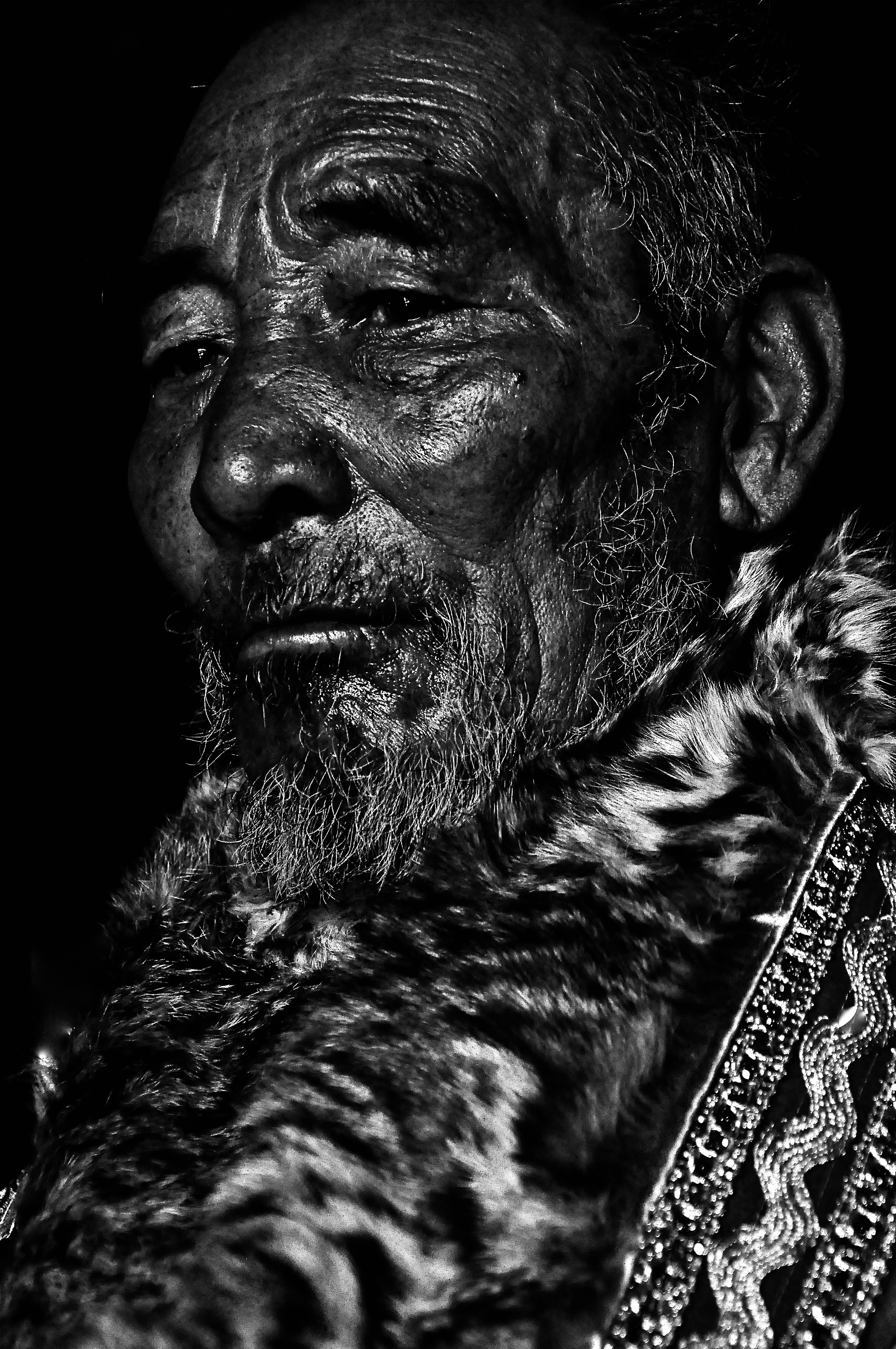
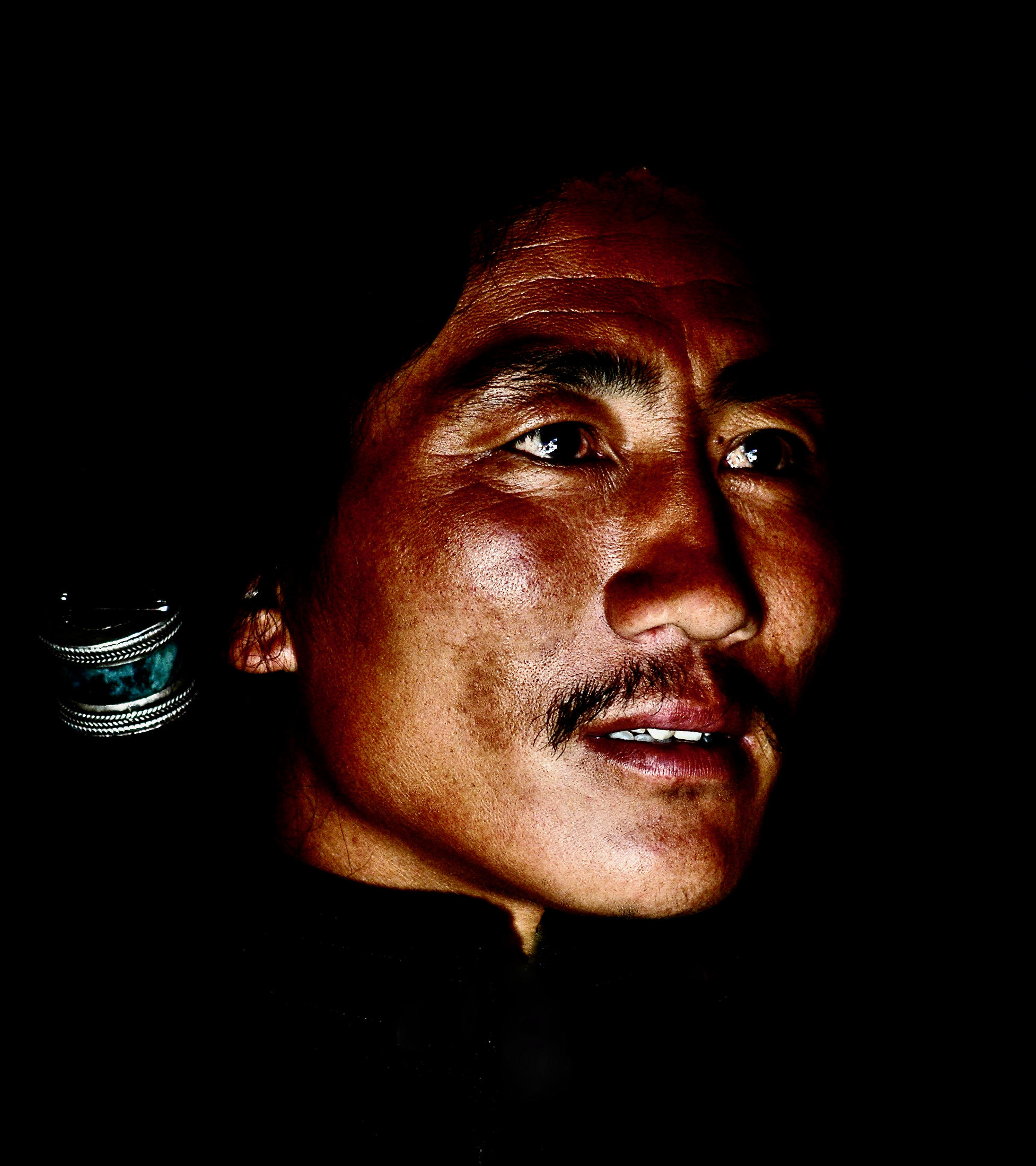
The face and words of Dawa spoke of Shola as though it was a living being

Though more than five years ago, the face of Dawa, an old Tibetan trader – who lived below the great Shola – and his rasping voice remain fixed in my mind.

It was his warning of Shola’s potential wrath, his respect and fear for the pass that created this ‘Shola’ envelope of awe in my mind. His warnings were clear, accurate and almost prophetic as he urged our team not to underestimate for a blink the pass and its moods.

Mules, paralyzed by ice in their hooves, caravans split into two and lost  from eachother (while only a few dozen metres apart), pilgrims traveling in circles only to freeze to death would give way to a gentle breeze at 4800 metres revealing the havoc only in spring.

Snow and ice gets peeled off of the glacier by winds which always get their way

Dorje waits at the pass, hooded and cigarette-less when we arrive back from our detour. His pack of goods rests on the pass summit and his face is that of a guard dog awaiting his beloved but errant owners.


Shola's exit point heading north

After a brief communion, some little hugs upon the pass Dorje signals it is time to descend. His nerves are those of someone who wishes not to burn up his allotment of good karma upon such a pass. Some darkened clouds pass from the east hovering long enough to remind us that we are amidst the heights that can force change in an instant.

Dorje and Michael make their way down from Shola's summit

Lunch is awaiting, and in the distant Drolma – who has already passed over – and her blue jacket awaits us. Lunch with Drolma is nothing to be trifled with and barring only a severe accident tardiness will not be tolerated. Our passage down is something that signals in me an ending as we exit the mountain belly. As much as the stone bastions can warn and threaten, they provide a sanctuary of silence and a tribute to the thoughts they inspire. Emptiness and its slow grip arrive.

Micheal (left), Kawa Karpo (centre) and myself

Decent takes us once again into forests and within forty minutes trees and valleys have blunted my precious mountain air.  Sweat up until now has silently evaporated, but now it swells and collects requiring more blasts of tea from my thermos to keep my lethargy creeping in.

Hitting a road seems abrupt. It is here we will await a vehicle to take us back to Deqin. Dull and sad, the vehicle and its enclosing windows and steel seem the worse kind of ending, but every ‘trip’ requires some kind of conclusion.

Looking east at Kawa Karpo's bulk

Deqin awaits as does the face of Metsomo, Kawa Karpo’s stunning wife who’s face has remained hidden from site. She awaits up in the sky…an ascent that will for now at least have to wait.

Elegant Metsomo...an end


Posted in Explorations, Mountains | Tagged , , , , , , , , , , , , , , , , , , , , | Leave a comment

Slips and Stones…

Mornings can ease in or they bump in. I wake in Gebo and have somehow managed to roll not only off of my matt but make it a good three metres from where I first lay my head the night before. The night was not one of the better in terms of rest and I wake in one of those very human but deadly conditions known as the ‘don’t-even-speak-to-me’moods. The night’s unfortunate events included hours of scurrying bodies throwing themselves every which way above, beside and under our sleeping facilities. To add to this the rumbling rodent population in the ceiling were at their brash best – their midnight forays managed to kick (I suspect deliberately pushed) dust, stone and refuse onto my sleeping bag in little droppings of sound and spray. They were on some sort of stimulant or perhaps they are simply heartier beasts than rodents I have known. In my messed up mind I pictured the small beasts discussing the various ways the punish the mind and body while taking drags off of the rodent cigarettes.

Peerless cook, Drolma could also unleash fire as she does here in the inevitable direction of Kandro

To add to this little nightly symphony, we slept within closed walls without windows, which never does my brain nor body any favours. On this morning I need silence and I need my tea and I need my tea at nuclear strength and in record amounts. The silence and the tea manage to get me back to an agreeable state, while an unexpected comment from Kandro does the rest.

Frosts touch the autumn forests before a more considerable of white comes down from the sky

The day is ugly grey and there is a new dampness in the air which Kandro sniffs in that very Kandro way. Nose flared, eyes rolled into his head, and an unlit cigarette at the ready he looks to the mountains beyond and whispers ‘kawa’ (snow). This lights up the last dark smoldering parts of my brain.

Pilgrims make their way by in the early morning shuffle and in the morning damp their collective breaths shoot out into the air. Gebo’s roughly 2400 metre altitude is low but around us grey fogs of air are being blown around. The day’s weather will be interesting.

A plastic tent, surrounded by thorns, one forlorn dog and a huge landscape is what this one camp offered up to the eyes. Most often a single person lives up here for a season offering up only the most meagre of rations for pilgrims

We begin our ascent almost immediately and Kandro is in bullish form leading his pack and saying little. We pass three pilgrims who stop in a little hut drinking their breakfast of butter tea. Tseba’s knee is bothering him and I can only imagine that if he is actually admitting it (albeit to Drolma, who in turn tells me) it must be grinding. We are making good time but it is the brutal descents that are shaking up our family’s bones.


It is the under appreciated descents that warrant attention. Joints and ligaments are punished for their efforts and as a climbing mate once stated "these slips are often the last slip one ever makes". Here Drolma carefully makes her way down

Briefly the skies clear long enough to show off a ragged old beast of a mountain covered in snow that is being hounded by wind-blown snow crests.

Depending on one's passions, sites like this either wither one or grab the blood vessels.

Our diet thus far has been noodles, onions, chilies, the odd bit of chocolate and when we can find some pork fat it is thrown into a soup. My 357-gram cake of raw Puerh is being consumed at an almost record rate as Michael too has discovered what I like to refer to as the “Green Leaf God”.

Sites and senses here in the heights are inextricably entwined, but the air and the way it rifles sharply up into the sinuses makes the body wonder if it has ever taken breath before, so clear and cold it is.

It is Tseba that is carrying the pace of the family behind us, and when we wait at a split in the path it is he who smiles and motions upward. His knee and his small agonies are put away. I admire the stoicism that isn’t quite stoic…there is emotion in him but it is ‘honest’ and there is always a magnificent smile. No bravado here…just an ability to push on.

A brief bolt of light, shoots down on a village that clings to the side of a mountain

We have come up close to a thousand metres and still our path heads almost straight up. At a lonely rest stop we are gifted a stunning but slightly ominous confluence of the sky’s powers. Sun bolts through clouds and snows begin, all while a black smoldering sky sits upon our path setting the backdrop.

Mid-afternoon we pass over the four thousand-metre level, making it almost two thousand metres of ascent from Gebo’s distant dot. As so often the case with ‘summits’ one world gives way to another upon arrival and we descend into an utterly still cold forest of mosses and scattered patches of cold. The path is wrapped in prayer flags and lined with gargoyle-like roots which along with the earth is frozen and unsympathetic.

Draped along a portion of the root, the liquid green mosses moved with every breeze and created a soft canopy at surprising altitudes

Down I plod, until I come upon two pilgrims who have lost their third member. The two young women sit and ask if I have seen a man along the route. I haven’t seen a soul in hours besides our group. There are the first signs of panic running over the one woman’s face, as the man in question had been suffering from blackouts and headaches and along these paths, one misstep can lead to a pitch drop without warning.

The day and its unusual currents of damp air, still valleys and slate coloured skies has the tang of something heavy about it and I too wonder if this man has gone missing. Both women have sun-scrubbed faces and cleavers for hands. I’ve long admired the capable thick hands of the mountain people as they seem (and in most cases are) capable of all of the world’s trials.

...and then the snow begins anew and I zip up for a fourth time in as many hours

Skipping off at a reckless pace the two women are off until one of them slips on a frozen patch of earth sending her off in the air to land with brutal thud. In falling she rarely misses slamming her head back onto an exposed rock. She is up in a flash and is off once again with barely a notice. Then she stops and whatever damage the fall did sets in and she bends over clutching her back.

Our view as we make our way further into the four thousand metre mark. Looking back it reminds you to always keep an eye on what one's past

Off in front of the ‘family’ I wait alone until the woman seems well. In the back of my mind and certainly theirs is their compatriot. Finally they move off, once again skipping with speed down into the forests.

Bleak and beautiful our path of frozen earth, prayer flags and gnarled roots leads on and up and down and up some more

Later we camp on a small peninsula of soft mosses and pine needles. As I explain the tale of the women Kandro flashes a look, “it isn’t only nature that takes people”. He explains how people, which include us occidentals, do go missing in these passageways and mountains.

He recalls of how a skeleton was found only because a dog had sniffed out some remaining wafts of flesh left on the bone. All money and identification were gone, but it was later determined that it was in fact a westerner. How the person had died was never determined but as Kandro surmises “the mountains can take you in many ways”.

Regardless of temperature, the end of most days had a foot bath thrown in to keep those underrated appendages in working (and respectful) condition. Here Michael and his formidable legs get covered up again before the inevitable numbness sets in

It can indeed.

Posted in Explorations, Mountains | Tagged , , , , , , , , , , , , , , , | 2 Comments