
Some sage and simple wisdom as always from those who spend time at the source, at the cup, and in the tea houses. Travel through some of Japan’s tea zones has been an immersion into more informality than expected.
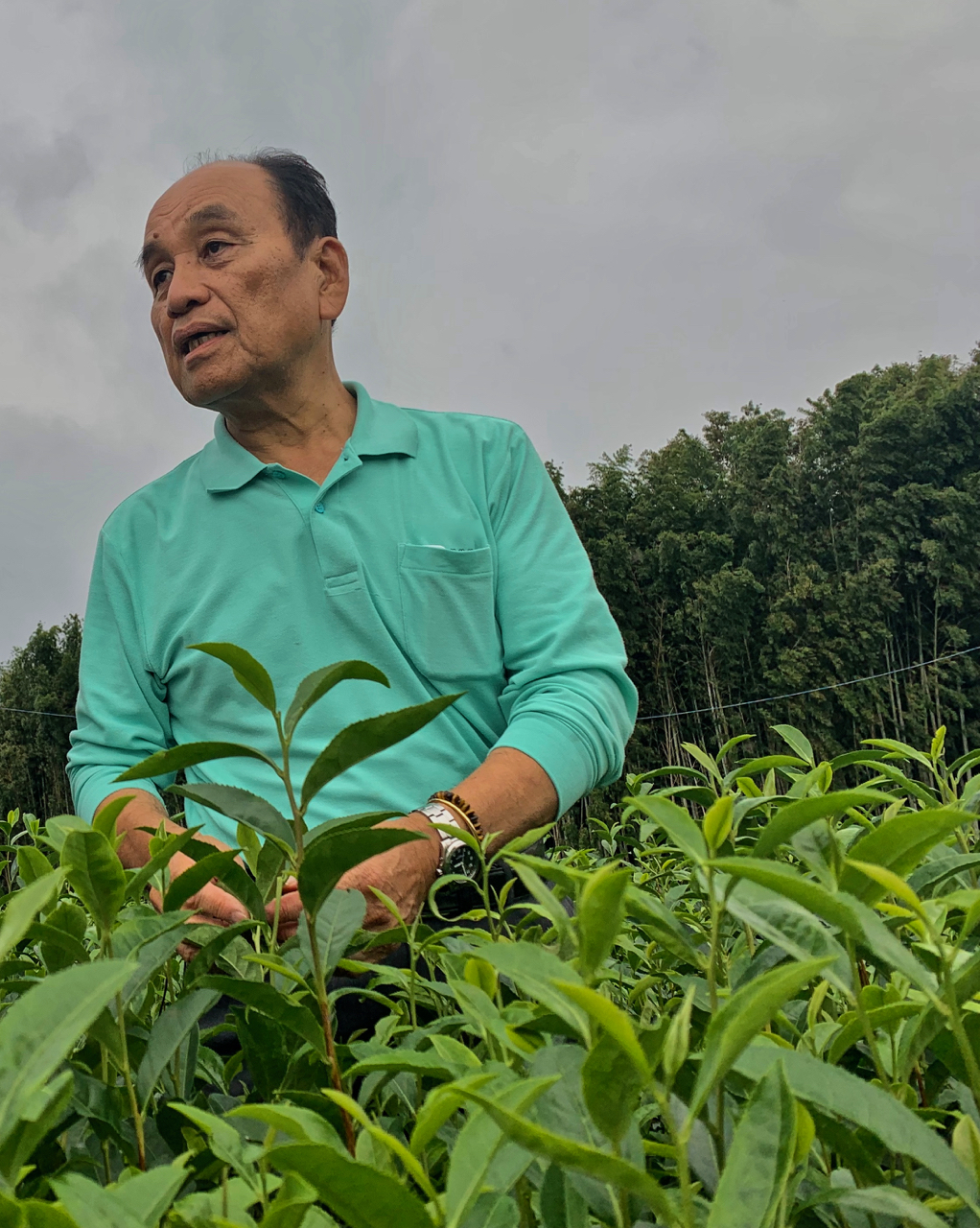
Always instructive are the farmers themselves or those who spend heaps of time within the gardens. The speak more truths about tea in a shorter period than any sales guru I’ve ever met. In a field of leaves that will become Sencha in Mie Prefecture.
Expected was a slightly more rigid adherence to form and protocol. Yes, there is a maniacal attention to detail and to what Japan does so well with leaves, stems, and twigs of the tea bush: the steaming; but there has also been a wonderful warmth to the view of tea’s role in the lives of locals.
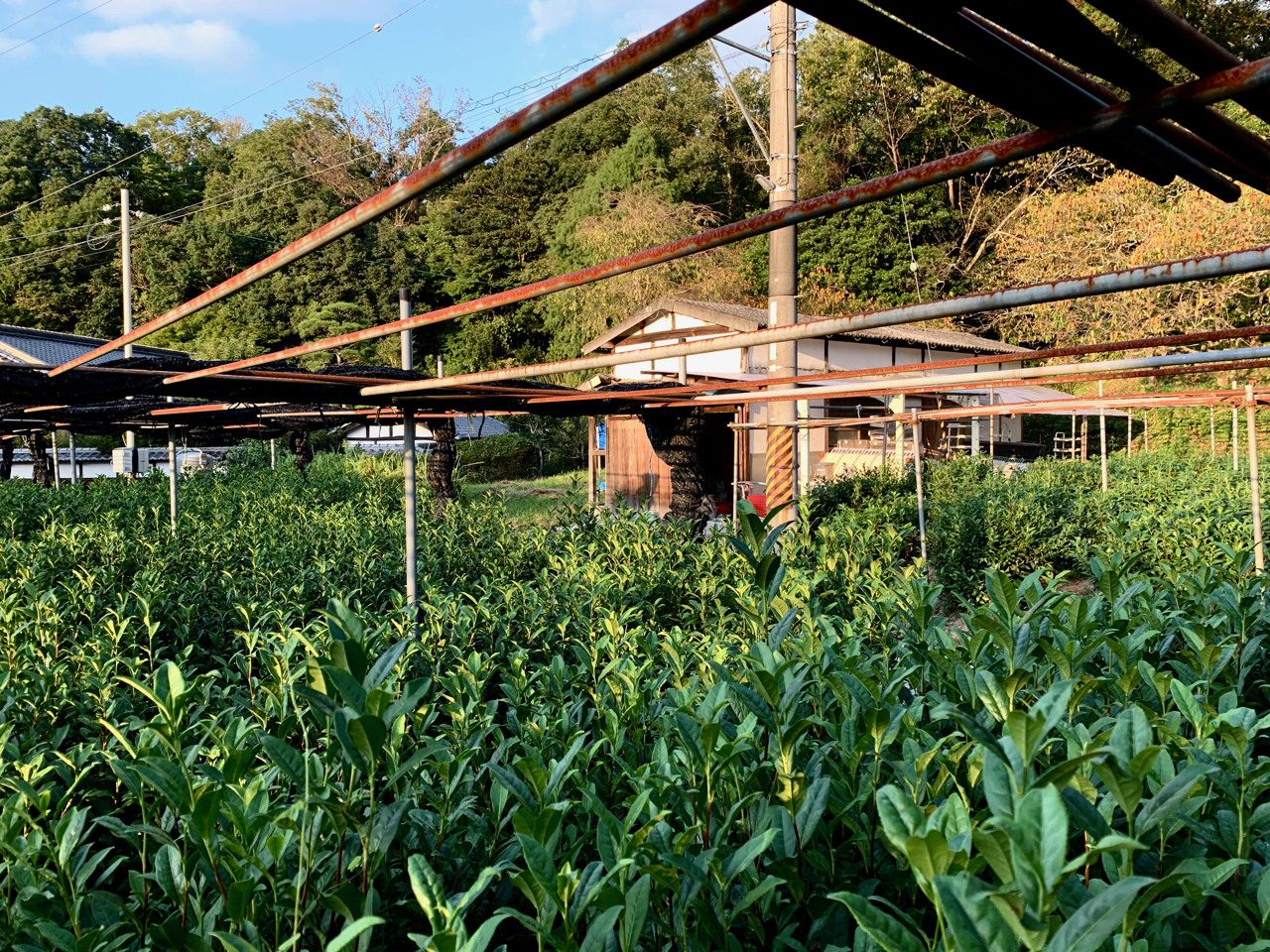
Off season though it may be, getting close to the small plots that produce the shaded gem that is Gyokuro still brings slight shivers
Some of the little instructive moments thus far that come gently, all at once, or just after a sip or six. The concept and flavour of Umami repeatedly came up regarding some Senchas and the prized Gyokuro’s.
An old master of Gyokuro production spoke about that elusive Umami honestly in words that were clear and inspired. “It is something almost sweet but not quite. I don’t know how else to describe it, but when it is absent in a tea, I know it”.
A wider vessel with a lid that can press down upon the leaves to extract every last drop of Gyokuro. The lower the temperature, the better if one wants the maximum impact of Umami on the palate.
Sipping the Gyokuro with 40-50 Celsius water revealed Umami that curled through the mouth unlike anything else in leaf form, other than perhaps zingy serving of one of the many varieties of sea kelp.
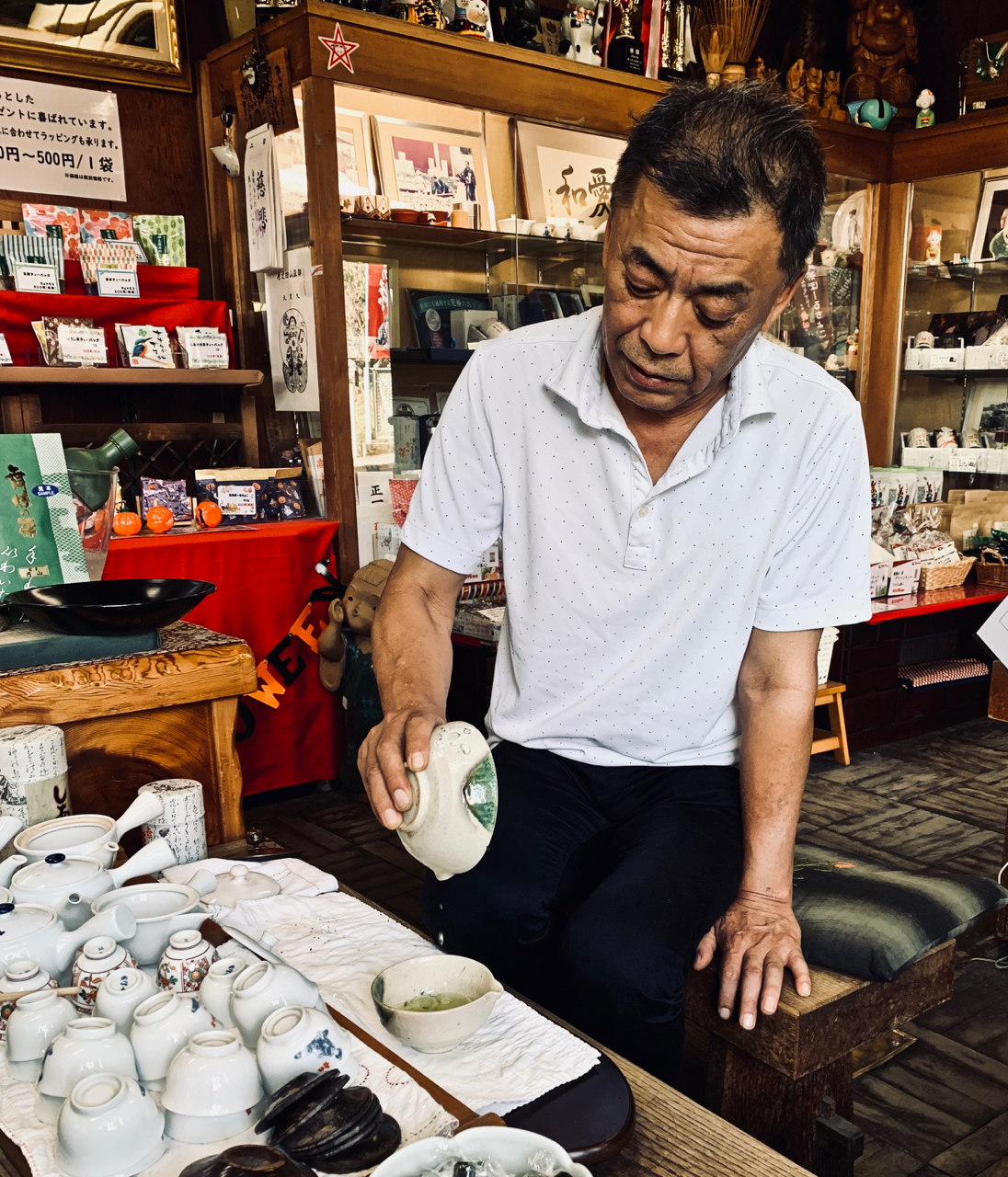
Using water with only a moderate amount of heat is ideal for Gyokuro and its Umami blasts. It was repeatedly recommended by growers and producers to serve the tea at between 40-50 degrees Celsius with a few minutes of infusion time
Small plot gardens rule here and the farmers and producers speak with a clarity that lays waste to some of the hyped up deliberately mystical references to tea. Here tea is spoken of simply, regardless of how complex and delicate the flavour profiles are that are coaxed and gently massaged out of the leaves.
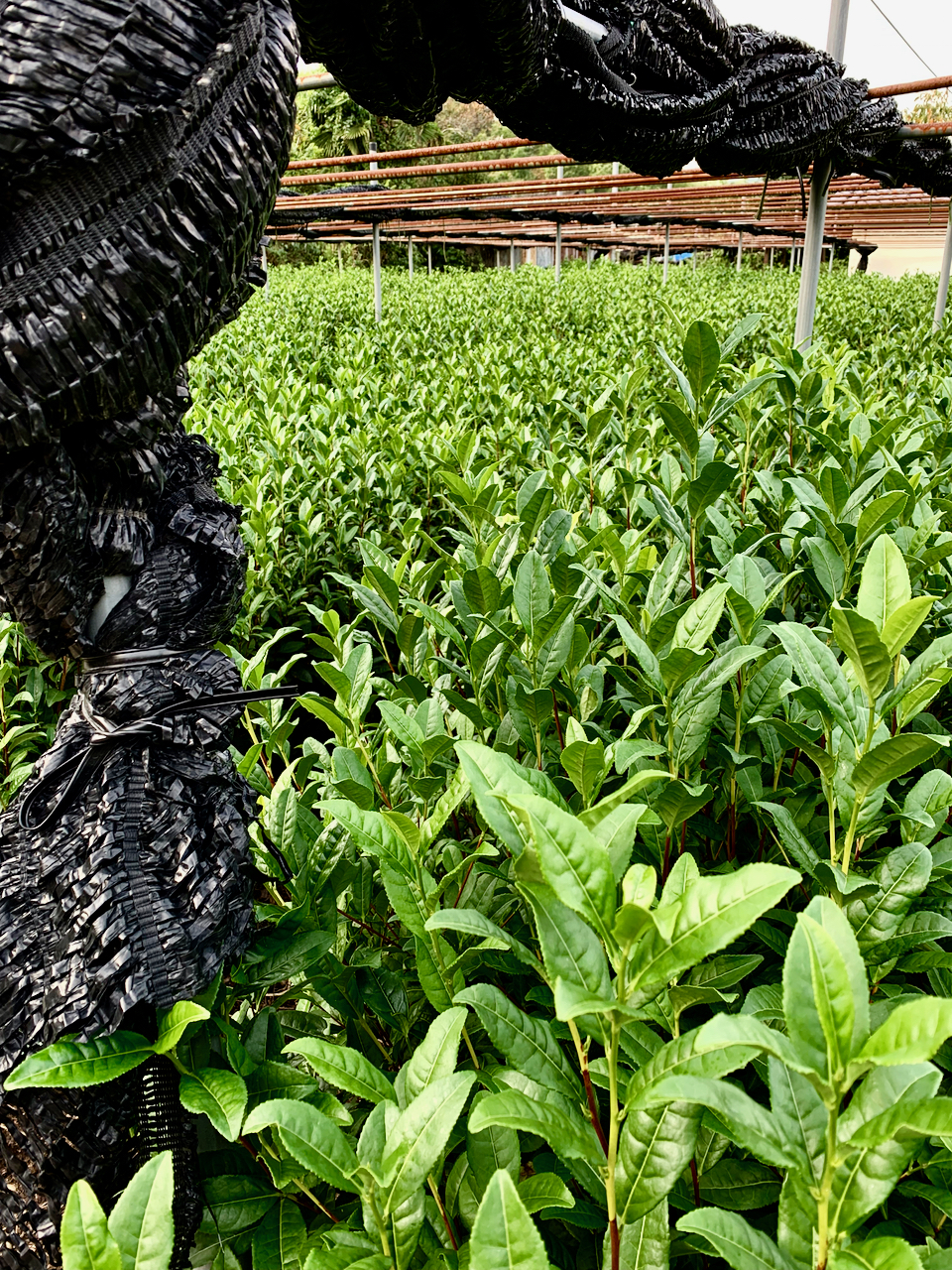
Unlike so much of the tea produced, Gyokuro’s small plots demand a skill set with production to maximize the quality of the small quantities made annually. The very best Gyokuro’s are made from leaves harvested once a year in April-May.
Tea’s tools are immaculate, kept spotless and passed down from generation to generation reminding that while harvests will change, the tools don’t have to. The plight too of the farmers who are increasingly at the whim of price points and weather events is made clear and bare.
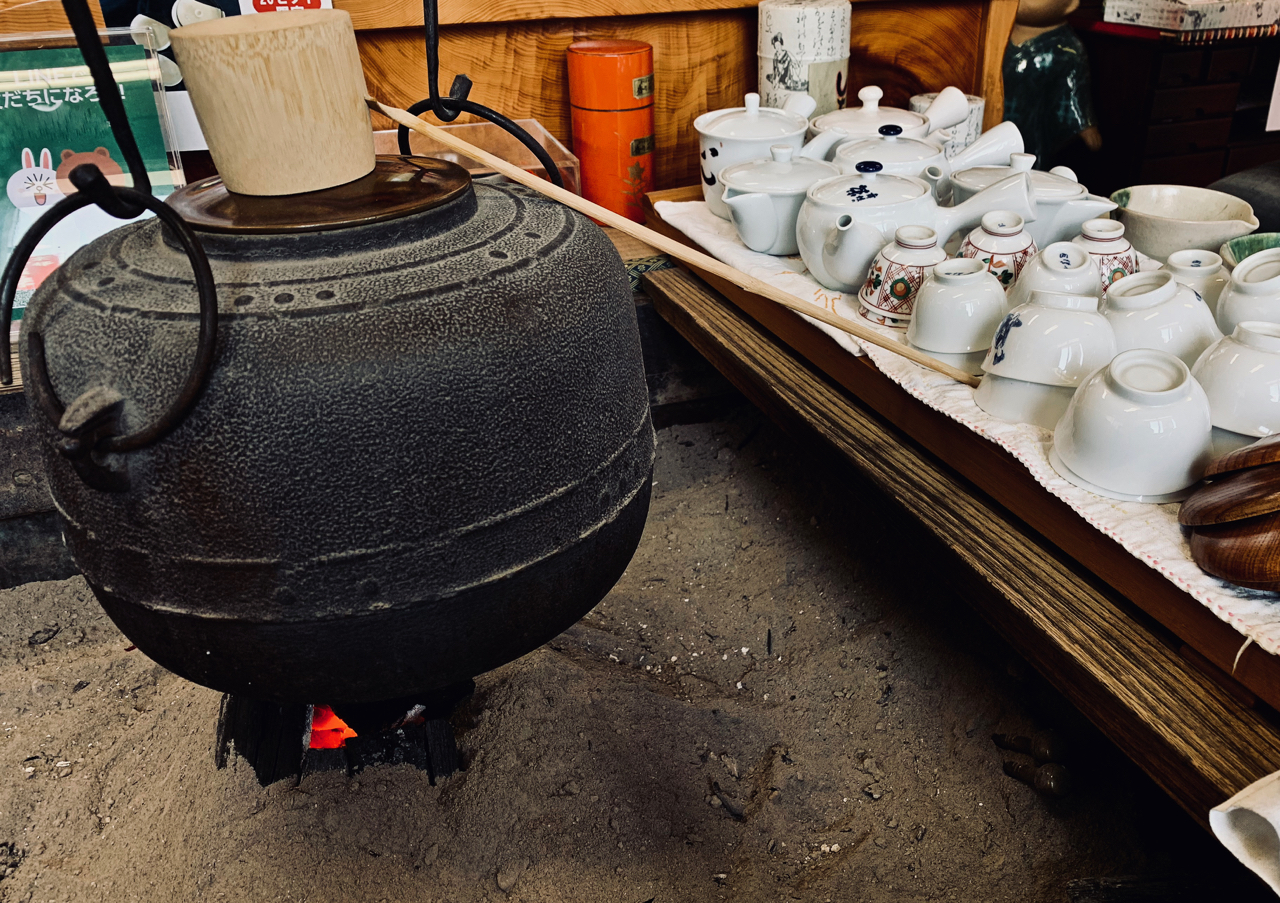
A Chagama hangs over smokeless bamboo charcoal keeping the water warm but not hot.
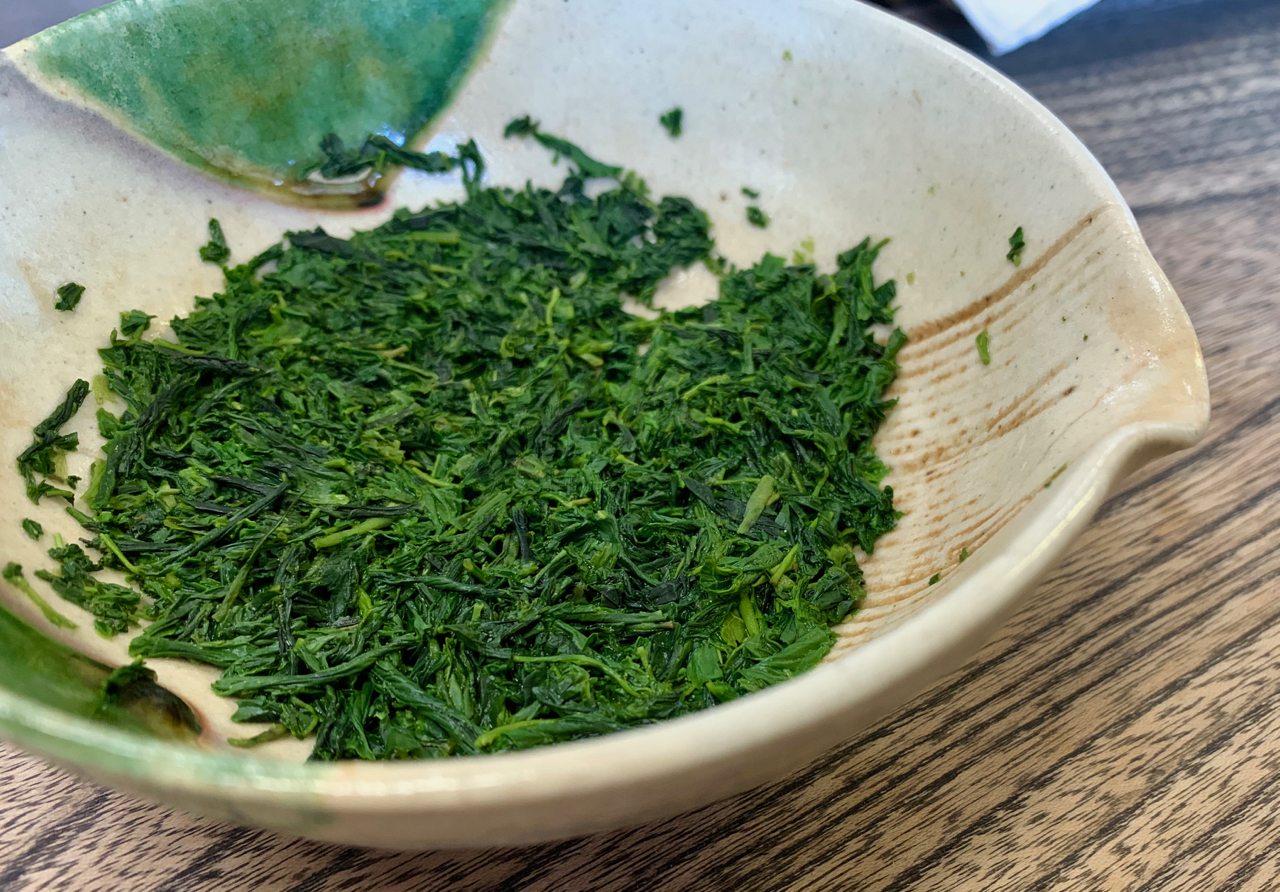
After having an afternoon of immaculate company and fuelled entirely by round after round of Gyokoru, the spent leaves were collected, plopped onto small plates and had a few small drops of soya sauce added. Nothing wasted, we were encouraged to eat the leaves as a kind of finale to the drinking session. Another drinking session was on the near horizon but for now, we would eat the leaves that had given us such joy in a liquid form.
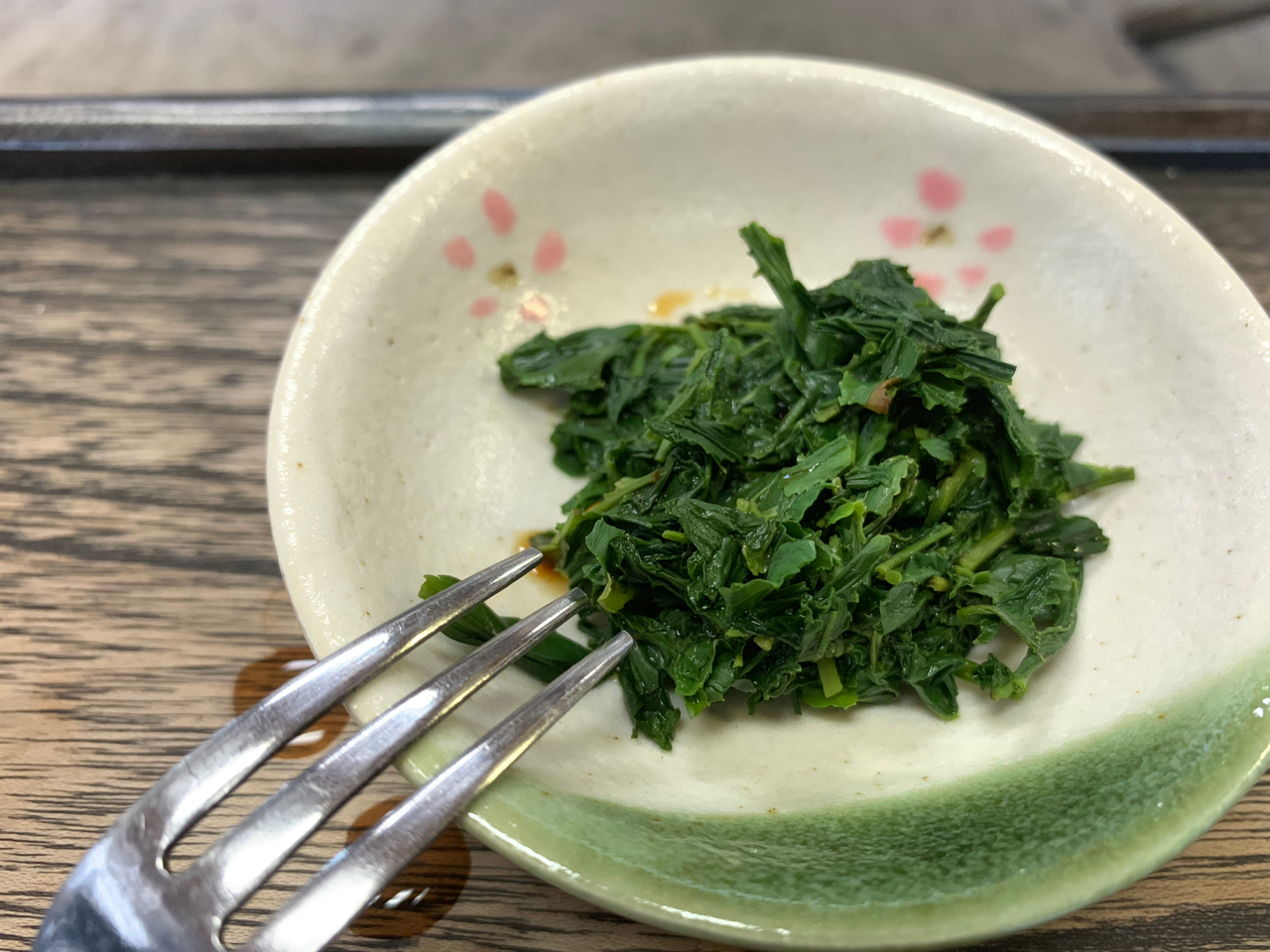
A last little savoury ‘dessert’ – spent Gyokuro leaves
