Tea Horse Road – Nomad Style

Few can claim to live as simply and as absolutely efficiently within (and atop) their environment as the nomads (ndrog’ba) who have long learned to survive and thrive well above 4,000 metres. Closer to the sky than most, their lives are shorn down to essentials, and precious few luxuries. One of the great fuels and treasures was ‘ja‘ (tea).
Tea Horse Road - Nomad Style - Jeff Fuchs

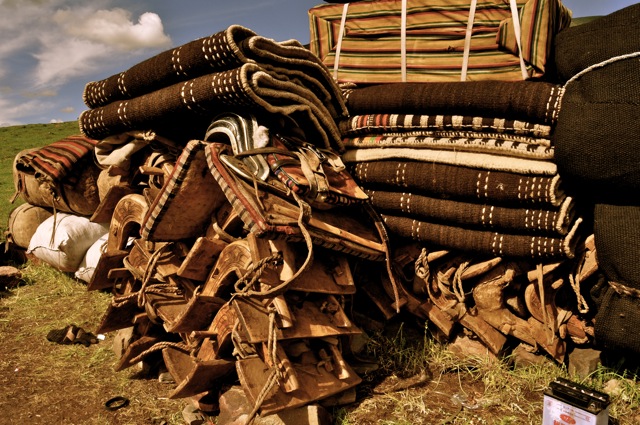
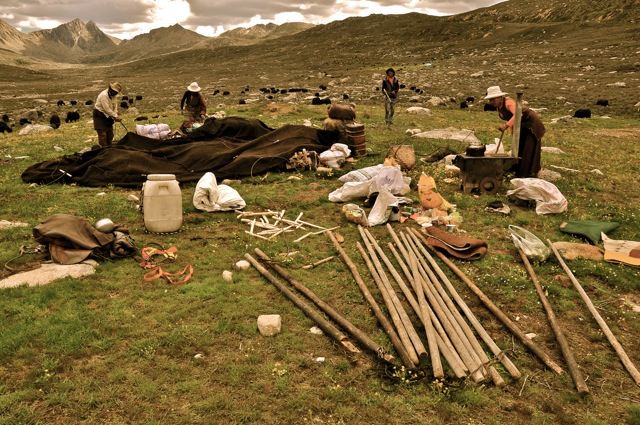
During many visits with Ajo and Omu over the course of years to their various seasonal homes, the bare minimum of ‘things’ always struck the mind. Like so much that is hidden and understated about these people, their role as prime consumers of tea along the Tea Horse Road has gone largely undocumented.
Tea Horse Road - Nomad Style - Jeff Fuchs
Only what is absolutely needed is taken…tea was inevitably one of those necessities.

Tea,  could always be found and was always craved and in fact much of the tea in history that travelled along the Tea Horse Road was destined for the smoky yak wool tents of the nomads. As one old saying of the nomads goes, “We waited for the caravans bringing tea like we waited for family”.

Within Ajo and Omu’s tent, tea was a constant, whether flowing, being prepared, or waitng. Most often in its bamboo and rattan cylindrical containers, bricks of the stuff inevitably sat close to the altar, occupying a place of rare privilege in the lives of truly stoic people.
Tea Horse Road - Nomad Style - Jeff Fuchs

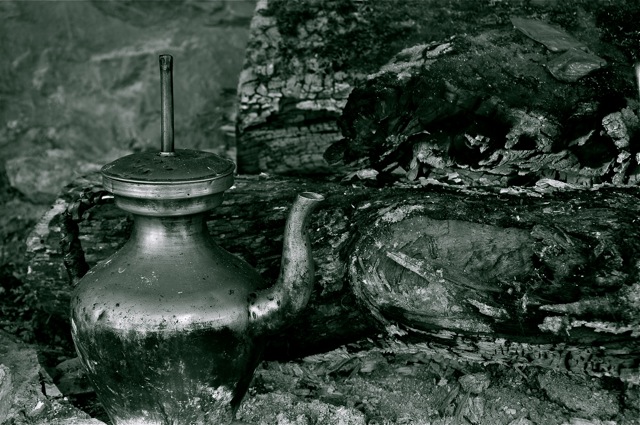
Cooked rather than infused, with additions of thick butter globs and salt, a kettle would be tucked into the embers and kept at the ready day and night.

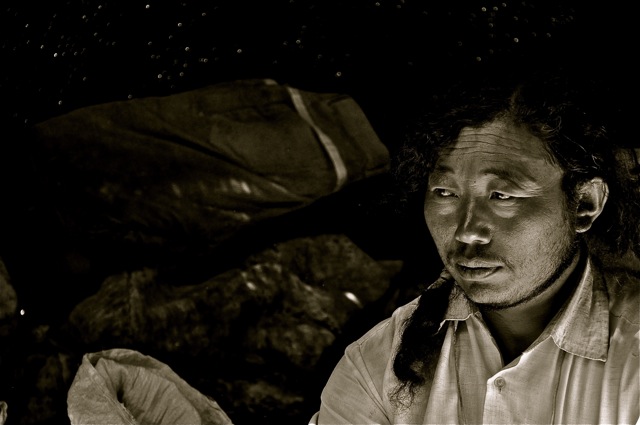
Of tea, Ajo once said, “Tea is a food, it is something valued from far away, and it is something that no nomad would ever leave the tent without first sipping.”
Tea Horse Road - Nomad Style - Jeff Fuchs

Ajo, like his people, wasn’t given to much excess talk, but tea, yak wool, and the weather occupied both his thoughts and words to an almost obsessive degree.

It is as concise a description as any I’ve heard about tea’s enduring vitality.

About JeffFuchs

Having lived for a decade in Yunnan, Fuchs’ work has centred on indigenous mountain cultures, oral histories along with an obsessive interest in tea. Fuchs is the author of 'The Ancient Tea Horse Road' (Viking-Penguin) and he was the subject of 'The Tea Explorer' documentary based on his exploration of the Tea Horse Road. His photos and stories have appeared on three continents in publications such as Kyoto Journal, TRVL, and Outpost Magazine, as well as The Spanish Expedition Society, The Earth, Silkroad Foundation, The China Post Newspaper, The Toronto Star, The South China Morning Post, and UNESCO amongst others. Various pieces of his work are part of private collections in Europe, North America, and Asia. Fuchs served as Asian Editor at Large for five years at award-winning Outpost magazine. Jeff has worked with schools and universities, giving talks on both the importance of oral traditions, tea and mountain cultures. His recently released book ‘The Ancient Tea Horse Road’ (Penguin-Viking Publishers) details his 8-month groundbreaking journey traveling and chronicling one of the world’s great trade routes, The Tea Horse Road. Fuchs is the first westerner to have completed the entire route stretching almost six thousand kilometers through the Himalayas a dozen cultures. Fuchs partnered with Wild China to create a journey along the Tea Horse Road which National Geographic Traveler called one of the "50 Trips of a Lifetime". He is co-founder of Akahiao Nature Institute on the island of Hawai'i along with his wife, Julie Rogers.
This entry was posted in Explorations, JalamTeas, Tea and tagged , , , , , . Bookmark the permalink.

Comments are closed.